Private walking tour of UNESCO sites in Palermo


Welcome to Palermo, one of Italy's most beautiful and historic cities. This private walking tour will take you on a journey through some of Palermo's UNESCO-listed sites in the center of the city, exploring the rich cultural heritage and stunning architecture of this remarkable place.
- Discover the best attractions of the centre of Palermo
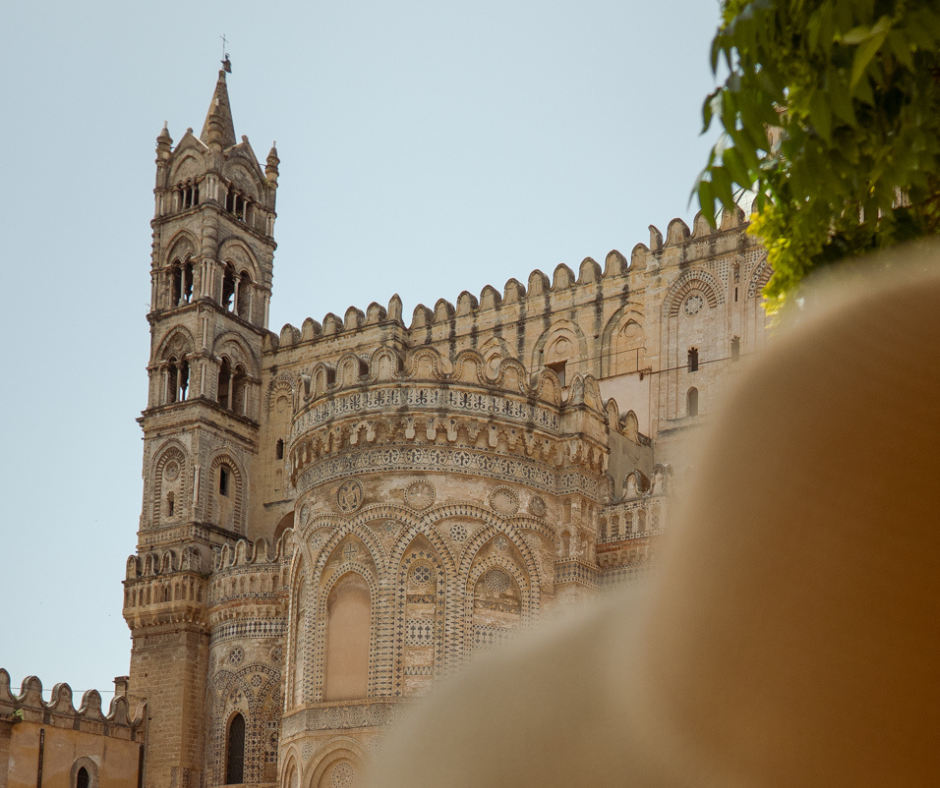
- Admire the magnificent Cathedral of Palermo
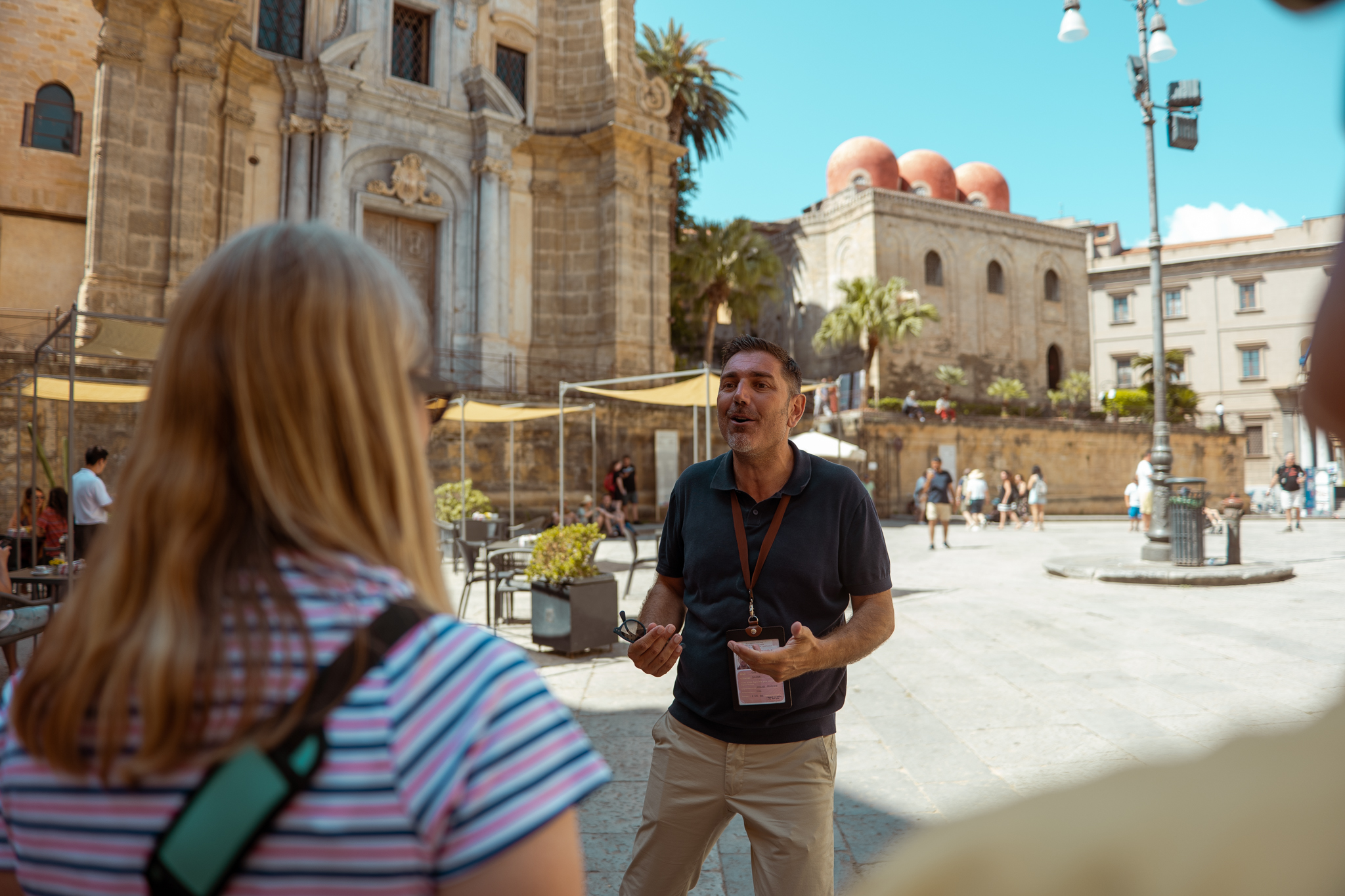
- Listen to the accurate explanation of a private guide
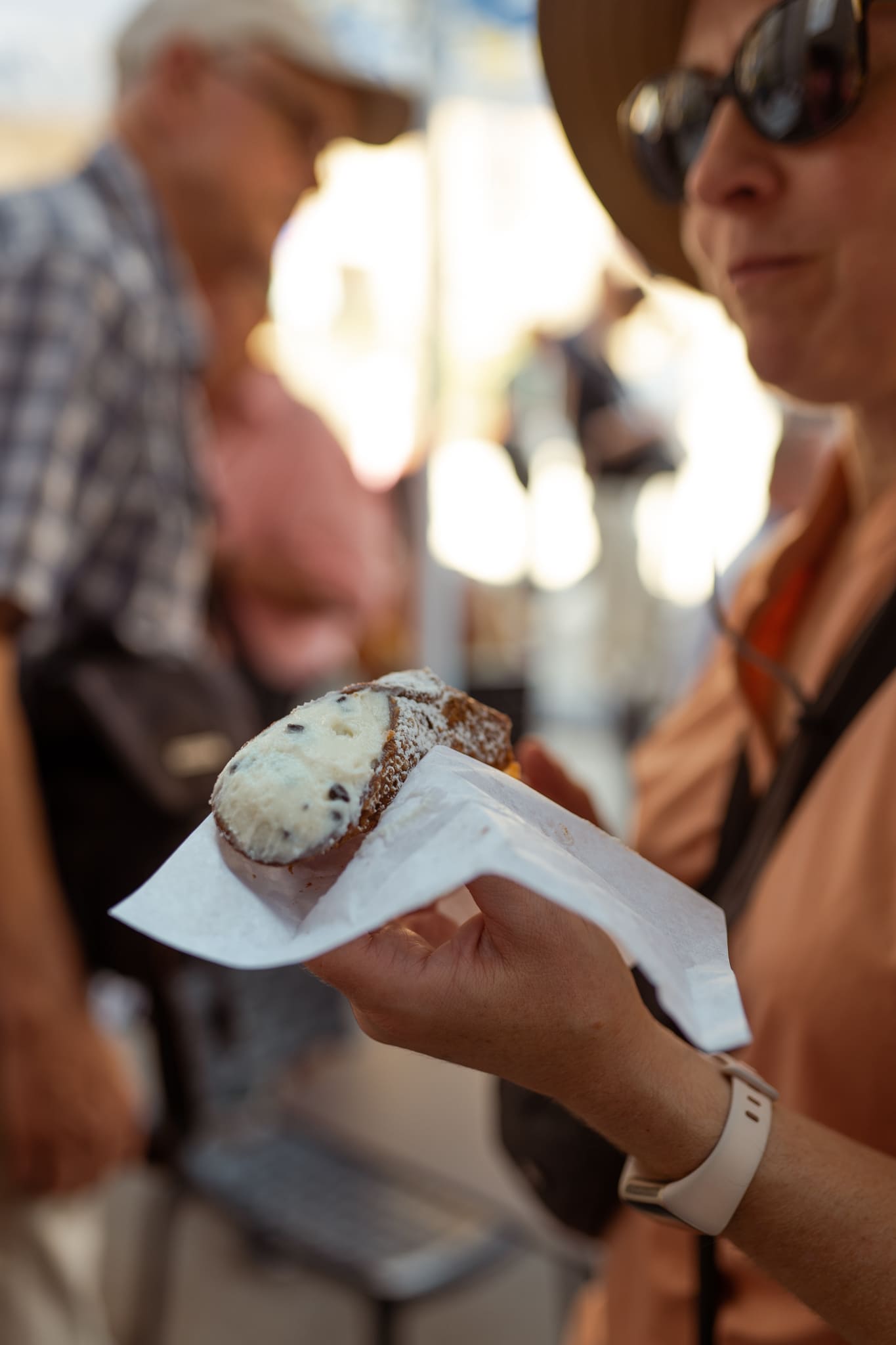
- Enjoy a tasty break with a Sicilian cannolo
- Learn more about the peculiar multicultural art of Palermo
Meeting Point
The meeting point is at our TOURIST HUB & COOKING SCHOOL in Palermo.
How many UNESCO World Heritage sites does Palermo have?
Palermo is home to eight UNESCO-listed monuments, all inscribed in 2015 as part of the Arab-Norman Palermo and the Cathedral Churches of Cefalù and Monreale site. The eight sites in Palermo include the Palazzo dei Normanni with its Cappella Palatina, the Church of San Giovanni degli Eremiti, the Church of Santa Maria dell'Ammiraglio (La Martorana), the Church of San Cataldo, the Palermo Cathedral, the Church of the Holy Spirit, the Church of San Spirito, and Palazzo della Zisa. This walking tour covers the exterior of eight UNESCO monuments in the historic centre, with entry to the Palermo Cathedral included, giving you a comprehensive overview of the city's extraordinary layered heritage within a three-hour walk.
What is the Piazza Pretoria and why is it called the Square of Shame?
Piazza Pretoria is one of Palermo's most spectacular public spaces, dominated by a vast 16th-century Florentine fountain commissioned for a Tuscan villa and transported to Palermo in 1574. The fountain is populated with dozens of mythological marble figures, many of them nude, which scandalised the conservative Sicilian population of the time — giving the square the nickname Piazza della Vergogna, the Square of Shame. Today the fountain is considered one of the finest examples of Mannerist sculpture in southern Italy. Our guide tells the full story of its Florentine origins, the political circumstances of its transfer to Palermo, and why the scandal it caused reverberated for generations.
Does the Palermo UNESCO walking tour include entry to the Cathedral?
Yes — entry to the Palermo Cathedral is included in this tour. The Cathedral of Palermo is one of the most architecturally complex buildings in Italy, reflecting more than a thousand years of successive rulers: Norman, Arab, Swabian, Aragonese, and Baroque influences are all visible in its facade and interior. The building began as a mosque, was converted into a cathedral in 1185, and has been substantially altered in nearly every subsequent century. It contains the tombs of Roger II of Sicily, Emperor Frederick II, and other Norman royal figures. Our guide explains the significance of each architectural layer during the visit.
What is the Martorana Church in Palermo and why is it famous?
The Martorana — formally the Church of Santa Maria dell'Ammiraglio — is one of the most celebrated examples of Arab-Norman architecture in Sicily and a UNESCO World Heritage site. Built in 1143 by George of Antioch, admiral of Roger II, it is particularly famous for its extraordinary 12th-century Byzantine mosaics, which are among the best-preserved Norman-era mosaics in the world. The church also gave its name to the marzipan fruits called martorana, traditionally made by the nuns of the nearby Martorana convent. This tour passes the church's exterior and our guide explains the history, the mosaics, and the culinary tradition that bears its name.
Is a cannolo tasting included in the Palermo walking tour?
Yes — a traditional Sicilian cannolo tasting is included in this tour. The cannolo is arguably Sicily's most iconic dessert: a fried pastry shell filled with sweetened ricotta, typically finished with candied citrus peel and pistachio. The quality of a cannolo is defined by the freshness of the ricotta and the crispness of the shell — and in Palermo, where the tradition is taken seriously, you can taste the difference immediately. Our guide takes the group to a local pastry shop with a genuine reputation for quality, and explains the regional variations and the traditions behind one of Italy's most beloved sweets. For guests who prefer something less sweet, an alternative of granita is also offered on request.
What is your Cancellation Policy?
Cancellations are free up to 24 hours before the tour departure. For cancellations made within 24 hours of the tour start time, as well as in case of no-shows, the full amount will be charged.


Starting from
price per person
based on a group of 4