Rome at Night: The Best Evening Experiences in the Eternal City
The monuments light up. The streets empty. The city that belongs to tourists at noon begins, slowly, to belong to itself again.

Most visitors do Rome during the day: the Vatican in the morning, the Colosseum in the afternoon, dinner somewhere in Trastevere in the evening. That's a good day. But Rome after dark is a different experience entirely. The ancient monuments are illuminated. The crowds thin out. The piazzas take on a different weight, and the city reveals a range of specifically evening experiences — from gladiatorial history told at night to live opera over a candlelit Roman dinner — that simply don't exist before the sun goes down. This is how to spend a Roman evening properly.
What to See in Rome at Night: St. Peter's Square
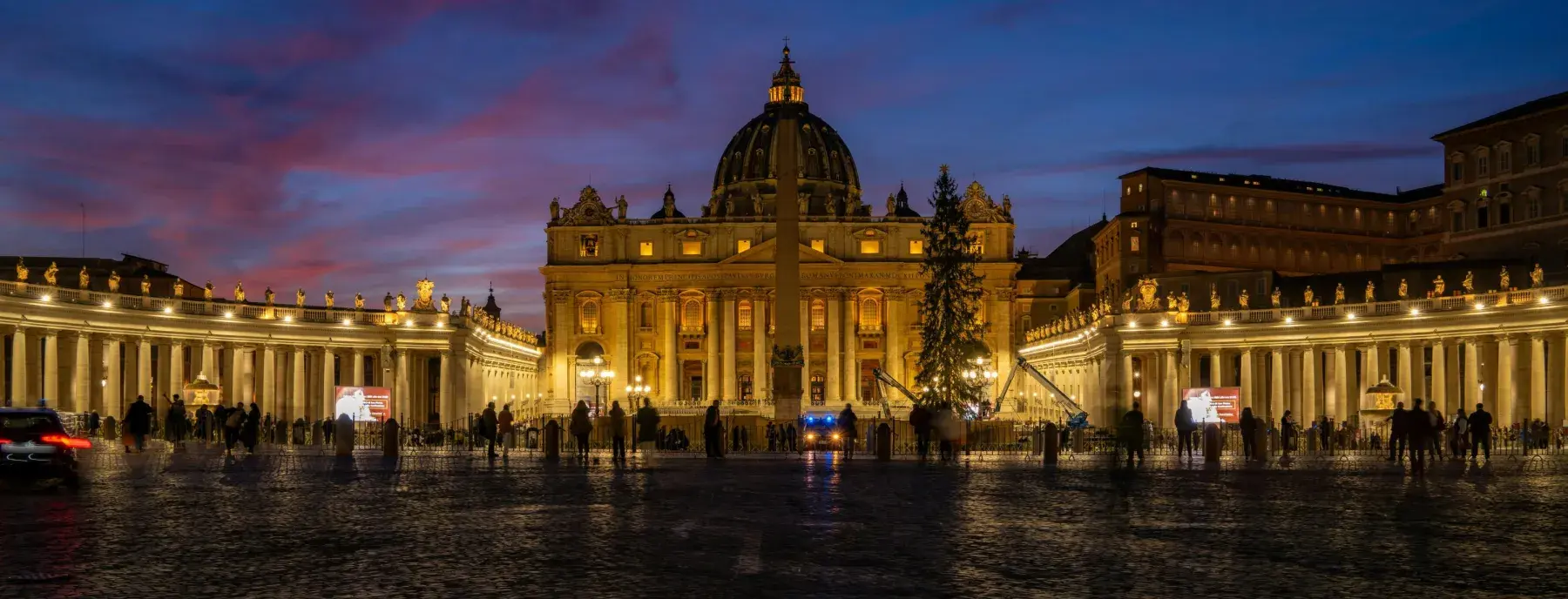
Most visitors to the Vatican arrive early in the morning to beat the queues. Almost none of them return in the evening — which is precisely why the hour before and after sunset at St. Peter's Square is one of the most extraordinary experiences Rome offers, at no cost whatsoever. The colonnade that Bernini designed to 'embrace' the faithful is lit from within. The obelisk at the centre of the square casts a long shadow. The dome of the basilica turns gold and then grey as the light shifts. The square, which holds tens of thousands of people during the day, belongs to a fraction of that number in the early evening.
The Prati neighbourhood surrounding the Vatican is also where some of Rome's best aperitivo bars are located — meaning you can combine the spectacle of the illuminated square with the ritual of an early evening drink within a five-minute walk. Castel Sant'Angelo, the former papal fortress on the Tiber just southeast of the Vatican, is equally dramatic at night: floodlit, reflected in the river, with the Ponte Sant'Angelo's angel statues visible along the bridge. This short walk — Vatican square, along the Tiber, across Ponte Sant'Angelo — takes under thirty minutes and produces the kind of images that stay with you long after the photographs have been filed. For the Vatican during the day, our skip-the-line Vatican Museums and Sistine Chapel tour is available at townsofitaly.com/en/rome/skip-line-vatican-museums-tour.
A Live Opera Dinner: Rome's Most Theatrical Evening


Opera has deep roots in Rome. The city has one of Europe's great opera houses in the Teatro dell'Opera, and a tradition of outdoor summer performances in the Baths of Caracalla that draws audiences from around the world. For visitors who want opera as an evening experience rather than a formal concert, the Live Italian Opera and Cooking Dinner Show brings together live performance, a three-course Italian dinner, and a theatrical Roman setting in a single, seamlessly designed evening.
The format: professional opera singers perform arias and duets from the great Italian repertoire — Verdi, Puccini, Rossini — while guests dine on a menu that is specifically Roman. The setting is intimate, the performance is genuine, and the combination of live music with food designed around it is one of those evenings that tends to exceed what you expected when you booked. This is not background music with dinner. It is a performance and a meal designed as one experience. Book at townsofitaly.com/en/rome/rome-opera-dinner-cooking-show.
Rome's Best Evening Walk


The most underrated evening experience in Rome requires nothing but time and comfortable shoes. Walk from Campo de' Fiori to Piazza Navona (five minutes apart), north through the medieval streets toward the Pantheon, east to the Trevi Fountain, and up to the Spanish Steps. This route takes between 90 minutes and three hours depending on your pace, and every landmark looks different — and better — at night.
The Trevi Fountain after 10pm, when the tour buses have left and the crowds thin to manageable proportions, is one of the genuinely beautiful experiences in Rome. The fountain is lit from below, the sound of the water fills the small piazza, and Nicola Salvi's baroque excess lands differently when you have enough space to see it clearly. Piazza Navona in the evening, with the Bernini fountains illuminated and the outdoor cafés still running, captures the particular Roman quality of spectacle that functions also as the backdrop for ordinary life.
Where to Eat After Dark in Rome
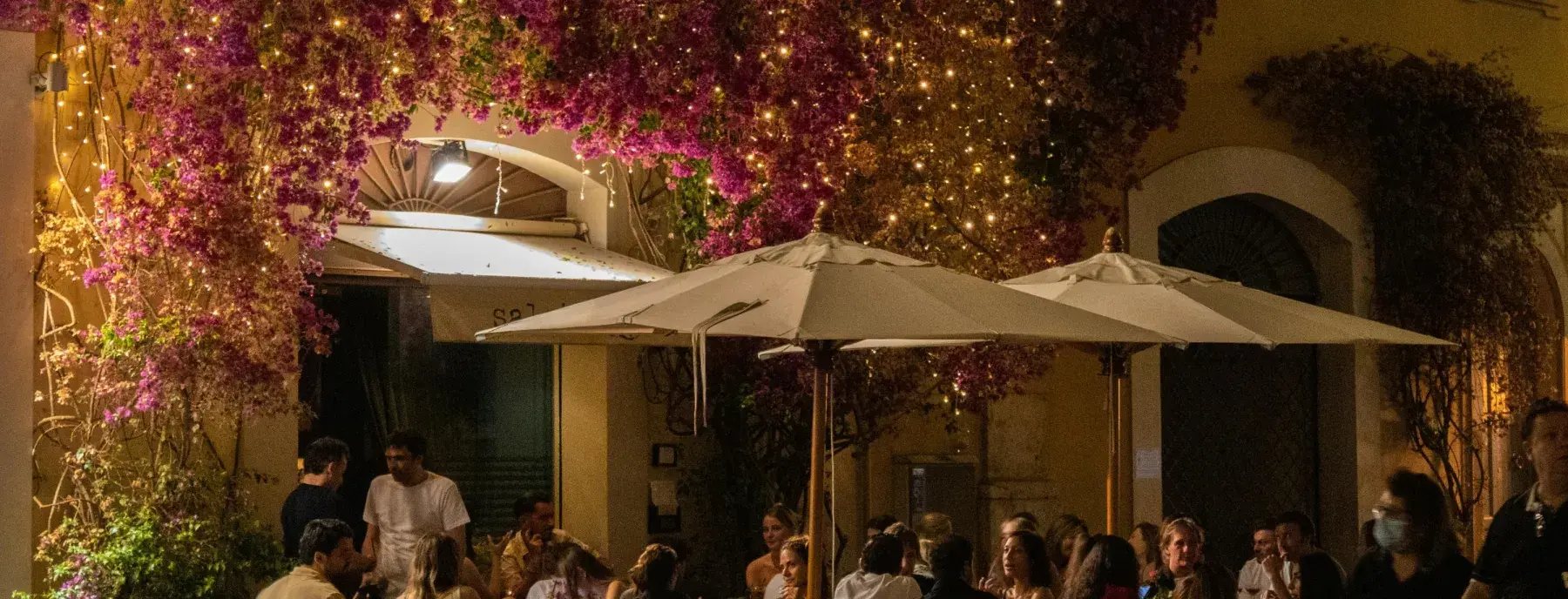
Romans eat late. Dinner before 8pm is unusual outside the tourist circuit, and the places worth eating at don't fill up until 9pm. The best evening meal in Rome is not in a restaurant adjacent to a major monument; it's in Trastevere — genuinely Roman despite its tourist reputation — in Testaccio (the neighbourhood built around the old slaughterhouse, with some of the best traditional Roman cooking in the city), or in Pigneto (where young Romans eat, further from the centre, without tourist menus).
The most useful practical advice: avoid any restaurant with a person standing outside trying to attract you in. Avoid restaurants that display photographs of the food outside the door. Avoid fixed-price tourist menus that offer pasta plus a secondo plus wine for a single round number. The places worth finding are the ones that don't advertise — because the locals come back every week regardless.
Aperitivo as the Prologue to a Roman Evening
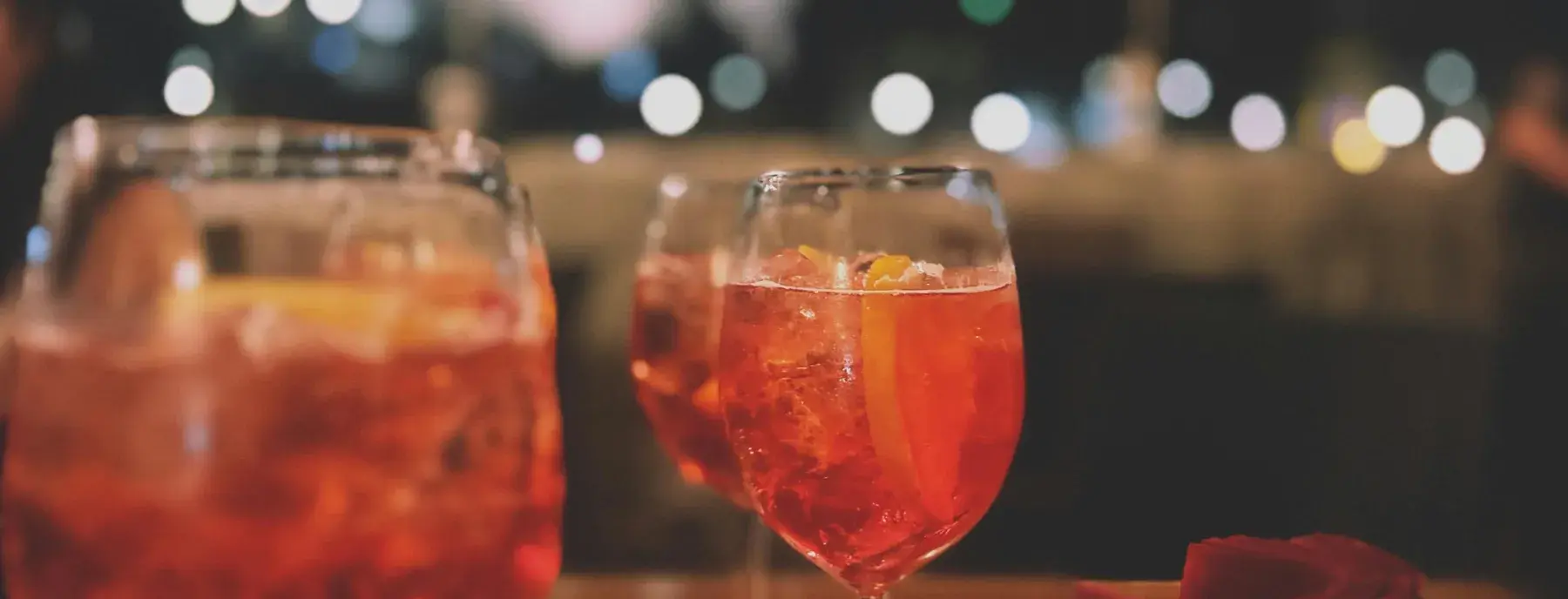
A Roman evening should begin with aperitivo — a drink and a small spread of food, somewhere between 6pm and 8pm, in one of the neighbourhoods where this is done well. Prati, near the Vatican, has elegant aperitivo bars with outdoor tables. Trastevere has a mix of quality and tourist-oriented options — look for bars filled with people who live in the neighbourhood. Pigneto offers the best quality-to-price ratio in the city for aperitivo.
Order a Campari Spritz or a Negroni, take whatever food comes with it, and plan to stay for one drink before moving on to dinner. This is the Italian way of entering an evening — a transition that makes the meal that follows feel more considered, more anticipated, and generally better than it would have been without the pause that precedes it. An evening in Rome that begins well tends to last longer than you planned. That's not a problem. That's the point.
Rome at night asks very little of you — just the willingness to slow down, look up, and stay out later than you planned. The city makes it easy.


