How to Spot Real Gelato in Italy (And Why Most Tourists Get It Wrong)
The towers of brightly coloured ice cream outside tourist shops look impressive. Real gelato doesn't look like that.

06 August 2026
Every street in Florence, Rome, and Milan has a gelato shop. Most of them are indistinguishable at first glance: bright colours, piled-high displays, English menus, and a queue of visitors who don't yet know what they're looking for. A small number of these shops make extraordinary gelato. The rest make a product engineered to look good in photographs. Knowing the difference before you walk through the door will save you a mediocre three euros — and point you toward the real thing.
Is Gelato Ice Cream?

Gelato is not ice cream. The distinction matters. Industrial ice cream is churned at high speed to incorporate as much air as possible, mixed with emulsifiers and stabilisers, and served very cold so it stays frozen during storage. Real gelato — artigianale — is churned slowly, contains significantly less air, is made fresh each day from natural ingredients, and is served at a slightly warmer temperature that gives it a dense, yielding texture entirely different from anything that comes out of a factory tub.
The difference in taste is not subtle. Real gelato melts differently, coats the mouth differently, and tastes of actual ingredients — fresh milk, eggs, seasonal fruit, single-origin chocolate, roasted pistachio — rather than their industrial approximations. Once you've tasted the real thing, the gap becomes impossible to ignore.
How To Spot Fake Gelato: The Piled-High Display Is a Red Flag


The single most reliable signal of tourist-trap gelato is the display. Shops that pile their gelato high above the metal container — in extravagant swirls, mountains of colour, impossible architectural peaks — are using a product loaded with artificial stabilisers and colourants specifically designed to hold that shape. Real gelato cannot pile that high. It would collapse under its own weight.
Artisan gelato is stored in metal containers with lids called pozzetti, flush with the rim or slightly below it. You cannot see the colour until the lid is opened. The display looks less dramatic. That's the point. Gelato stored in pozzetti stays at a consistent temperature, away from light and air — both of which degrade flavour — and this is the standard at every serious gelateria in Italy.
How to Read a Gelateria Before You Walk In
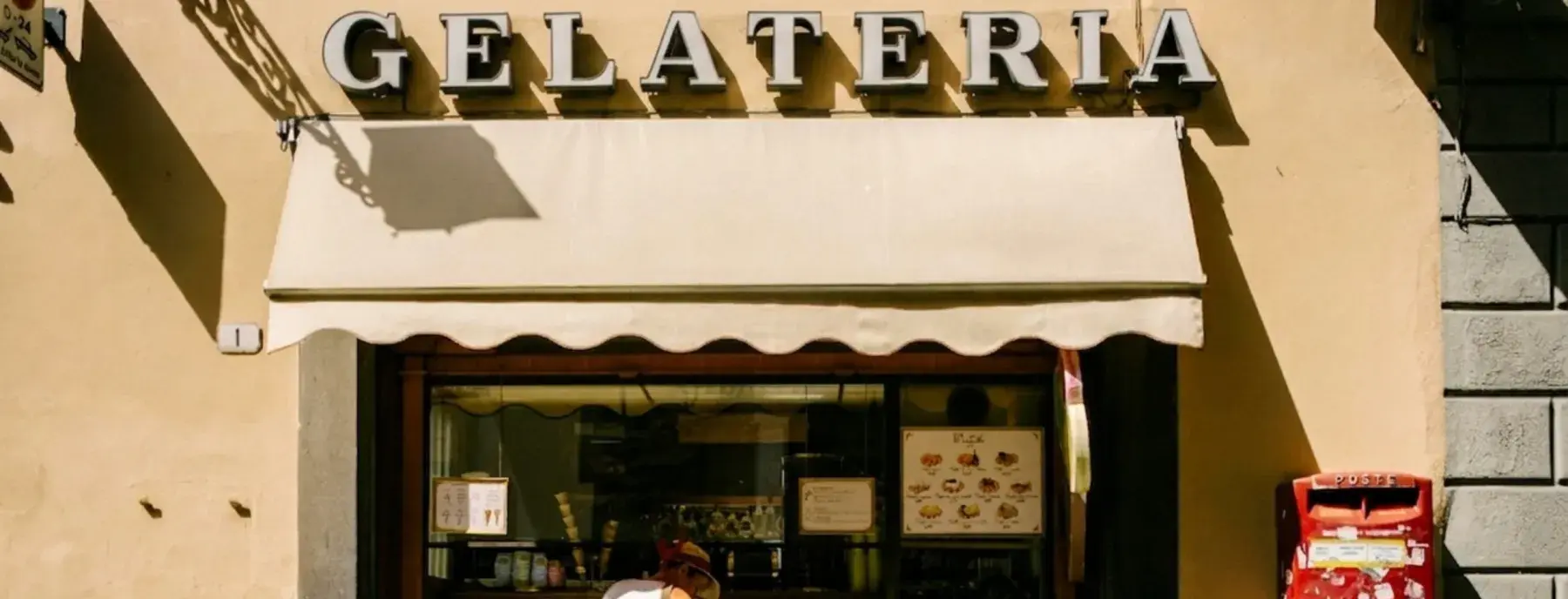
Stand outside and observe. If the display is behind open glass with flavours piled high in pyramids of vivid colour — electric green pistachio, neon yellow banana, hot pink bubblegum — walk past. If the shop has a sign saying artigianale or produzione propria (made on the premises), look more carefully. These terms are not regulated, so they don't guarantee quality, but a shop that doesn't make this claim almost certainly isn't making gelato from scratch.
Look at the number of flavours. A quality gelateria typically offers between twenty and thirty, not sixty or seventy. Check the colours: real pistachio gelato is grey-green, not fluorescent. Real stracciatella is off-white with dark chocolate flecks, not bright white with brown swirls. Natural colours are always duller than artificial ones. That dullness is a quality signal.
The Best Flavours to Order


A reliable test for any gelateria is to order a single-ingredient flavour: pistachio, nocciola (hazelnut), or cioccolato fondente. These flavours have nowhere to hide. If the pistachio is made from real Sicilian pistachios, the gelato will be dense, slightly savoury, and deeply flavoured. If it's made from industrial paste, it will taste sweet and vaguely artificial.
Stracciatella — a fior di latte (sweet cream) base with shards of dark chocolate — is another benchmark. It should taste primarily of fresh milk, with sharp, contrasting chocolate. Fruit sorbetti (which contain no dairy) are also an excellent test: seasonal fruit, made fresh, should taste almost aggressively of the real thing. Avoid flavours named after brands — Nutella gelato, Kinder Bueno gelato. These are engineered for Instagram, not for flavour.
Gelato by City: What to Look for in Florence, Rome and Milan
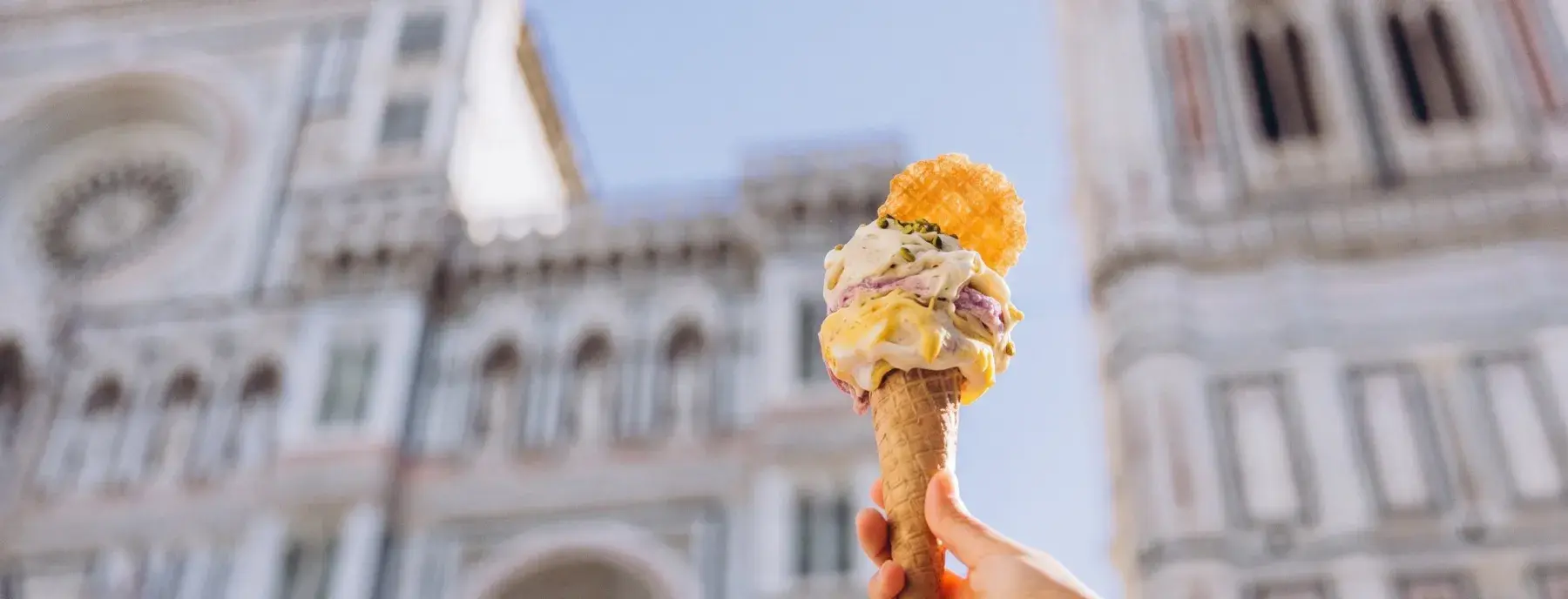
In Florence, gelato culture runs deep — standards here are high and competition between quality shops is fierce. Look in the Oltrarno neighbourhood and around the Mercato Centrale, away from the tourist concentrations near the Duomo. In Rome, the best gelato is found where Romans actually live: Prati, Testaccio, Trastevere on its quieter streets. The area immediately surrounding the Trevi Fountain is almost exclusively tourist-grade — and the prices reflect it.
Milan has excellent gelato, particularly in the Navigli and Isola neighbourhoods. What sets Milan apart is the sophistication of flavour combinations and the quality of base ingredients — reflecting the city's food culture more broadly. Whatever the city, the rule is consistent: the further you walk from the main tourist concentration, the better the gelato tends to be.
The One Question Worth Asking
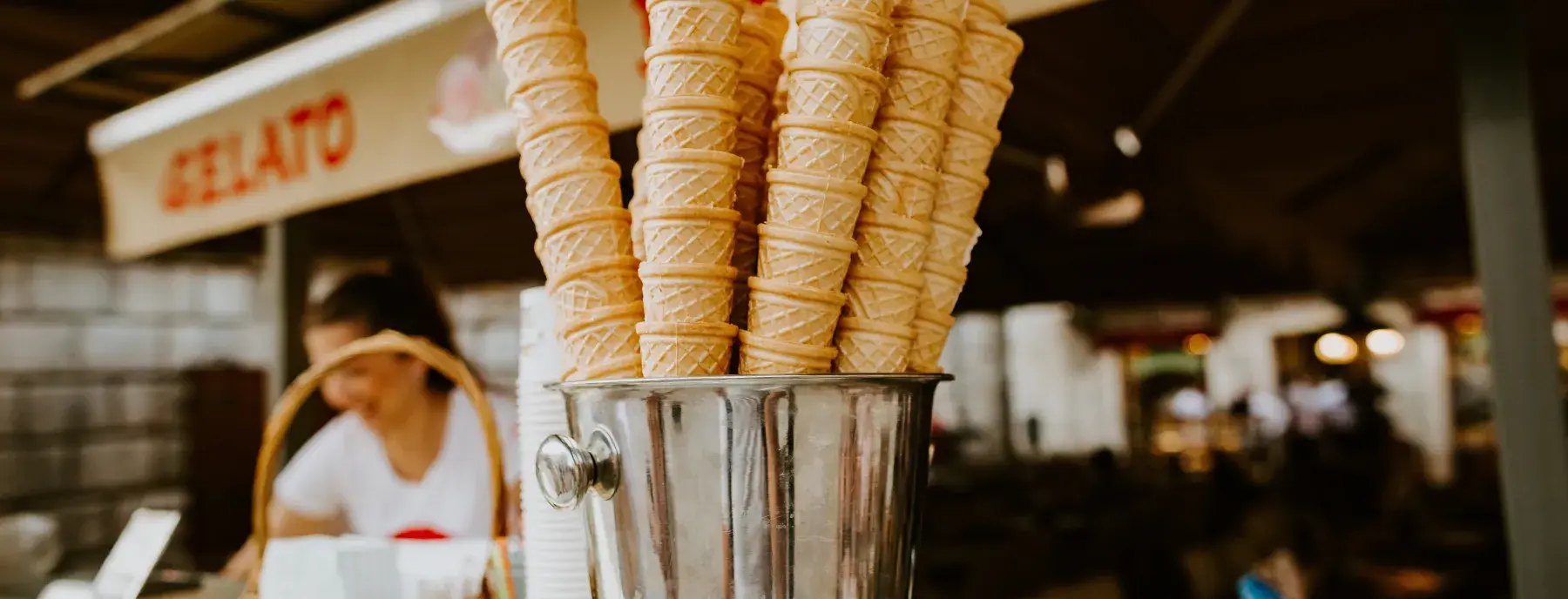
If you want to be certain before you commit, ask: 'È produzione propria?' — Is this made here? In a quality gelateria, the person behind the counter will answer yes without hesitation. In a tourist-oriented shop, the question will land differently. You will notice the pause.
You can also ask to taste before you buy. Every real gelateria will offer a small plastic spoon to try a flavour. Shops that refuse — where you queue, point, and pay without tasting — are not concerned with whether you like what you're about to buy. That, too, tells you exactly what kind of shop you're in.
Want to Make Real Gelato at Home? A Cooking Class Is Where It Starts

The best gelato you'll eat in Italy is made fresh every morning from a small number of ingredients: whole milk, fresh cream, egg yolks, sugar, and whatever flavours the gelatiere has chosen that day. No stabilisers, no emulsifiers, no pre-mixed bases from an industrial supplier. This is also exactly how you can make it at home — and it's easier than most people assume, once someone shows you the technique.
In our cooking classes in Florence and Rome, the gelato component of the session teaches you the base from scratch: how to build a custard properly, how to control the churning process, and how to get the texture right without professional equipment. The flavour combinations you can try at home are limitless — seasonal fruit, pistachio, dark chocolate, coffee. What you take away from the class is not a single recipe but a method. The difference between homemade gelato and ice cream made in the same machine is entirely in the technique, and that's precisely what the class teaches. More at townsofitaly.com/en/cooking-classes/florence and townsofitaly.com/en/cooking-classes/rome.
Real gelato is not the most visually dramatic thing on the street. It's the best-tasting thing in the freezer. Once you know what you're looking for, you'll never settle for the other kind again.
In this article
- Is Gelato Ice Cream?
- How To Spot Fake Gelato: The Piled-High Display Is a Red Flag
- How to Read a Gelateria Before You Walk In
- The Best Flavours to Order
- Gelato by City: What to Look for in Florence, Rome and Milan
- The One Question Worth Asking
- Want to Make Real Gelato at Home? A Cooking Class Is Where It Starts
Make it real
Explore our tours in Italy


