Nonna Wilma's Lasagna: A Recipe Passed Down Through Generations
The taste of a Tuscan Sunday — layers of tradition in every bite

In Italy, lasagne is not just food. It's a Sunday. It's the sound of a kitchen filling with the smell of slow-cooked ragù. It's the table set before the guests arrive, and the wait that makes it taste even better when it finally comes. This is Nonna Wilma's recipe — not from a book, but from decades of Sunday mornings in a Tuscan kitchen.
A Dish Made for Sundays


Italians don't eat lasagne on a Tuesday. It belongs to Sundays, celebrations, and the kind of long, unhurried lunches where time slows down and the table fills with voices. Making it takes patience — fresh pasta, slow ragù, careful layers. It's a dish that asks for time. And rewards every minute of it.
The Ingredients


Fresh egg pasta sheets (or good-quality dried lasagne). For the ragù: minced beef and pork, tomato passata, white wine, celery, carrot, onion, olive oil. For the béchamel: butter, flour, whole milk, nutmeg. Parmigiano Reggiano — generous with it.
The Recipe
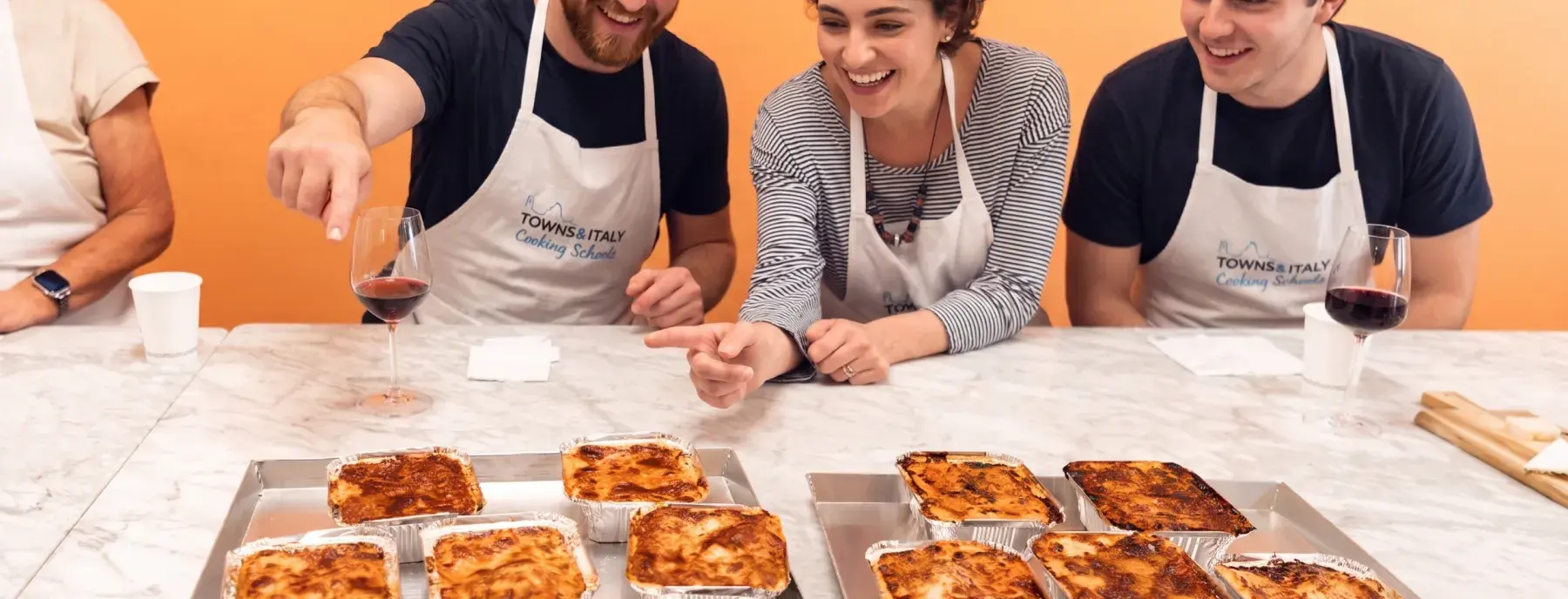
Start with the ragù: sauté onion, celery, and carrot in olive oil. Brown the meat well. Add white wine and let it evaporate completely. Add the tomato passata. Simmer on a low heat for at least 90 minutes, stirring occasionally. This is where the flavour is built — don't rush it.
Make the béchamel: melt butter, add flour and stir to combine, then gradually add warm milk. Cook gently until thick and creamy. Season with salt and nutmeg.
Assemble in a deep baking dish: a thin layer of ragù on the bottom, then pasta, ragù, béchamel, and Parmigiano. Repeat the layers, finishing with béchamel and a generous handful of Parmigiano on top.
Bake at 180°C for about 40 minutes, until golden and bubbling at the edges. Let it rest for 10 to 15 minutes before serving. Patience is part of the recipe.
Food tastes different when it carries a story. Make this once with us, and it becomes your story too.
In this article
Make it real
Explore our tours in Italy


