Da Vinci's Last Supper: The Complete Guide to Visiting in Milan
Leonardo painted it on a wall in 1498. It has never been moved. Here's everything you need to know before you go.

The Last Supper is not in a museum. It is on the wall of a refectory attached to the church of Santa Maria delle Grazie, in a room built for monks to eat their meals in silence. Leonardo da Vinci painted it there between 1495 and 1498, using an experimental technique that began to deteriorate almost immediately. The painting has survived five centuries of damage, a Napoleonic army that used the refectory as a stable, and a World War II bomb that destroyed the surrounding building but left the wall intact. It is, without exaggeration, one of the most extraordinary things you can stand in front of anywhere in the world. This guide tells you everything you need to know before you do.
What The Last Supper Actually Is
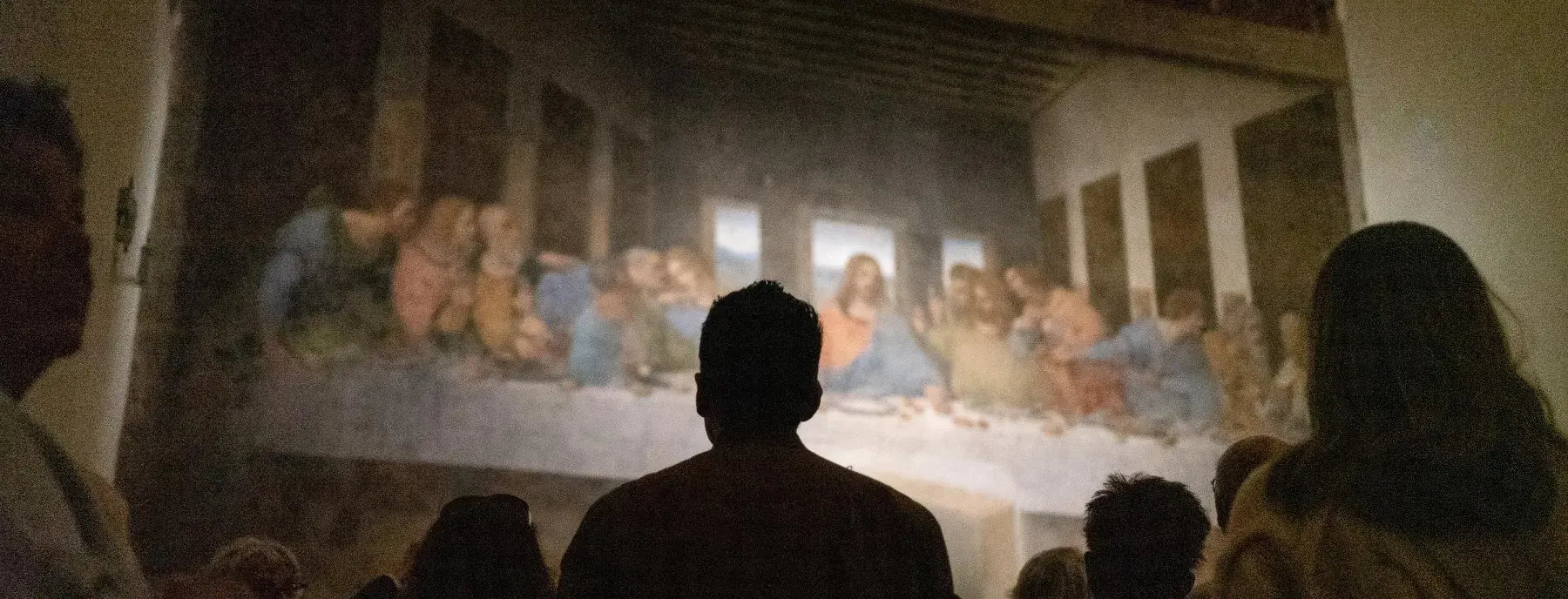
The Last Supper depicts the moment described in the Gospel of John when Jesus announces to his disciples that one of them will betray him. Each of the twelve apostles reacts differently — with shock, denial, accusation, sorrow, and confusion. Leonardo spent years studying human expression to capture these reactions, and the painting is essentially a masterclass in the psychological depiction of a single moment. Every figure is individually characterised, positioned within a mathematical perspective system that draws the eye inevitably toward the central figure of Christ.
What makes the painting technically unusual — and what has made its conservation so difficult — is that Leonardo did not use standard fresco technique, which locks pigments permanently into wet plaster. Instead, he experimented with tempera and oil on dry plaster, giving himself more time to work but producing a surface that began to flake and deteriorate within decades of completion. What you see today is the result of the most recent major restoration, completed in 1999 after 21 years of painstaking work. It is the closest we can come to what Leonardo painted — and it is still one of the most astonishing things in the world.
Why You Must Book Tickets Months in Advance


Access to The Last Supper is strictly controlled for conservation reasons. The refectory holds a maximum of thirty people per session, and visits are limited to exactly fifteen minutes. The system exists to protect the painting: humidity, body heat, and carbon dioxide from visitors accelerate the deterioration of a surface that is already fragile. The fifteen-minute limit is part of a conservation protocol, not a bureaucratic inconvenience.
The result: tickets sell out weeks — and during peak season (April through October) — months in advance. There is no walk-in access of any kind. Tickets not booked in advance through the official channel or an authorised tour operator simply do not exist at the door. This is not a situation that can be negotiated on the day of your visit. Book before you leave for Italy. Our guided Last Supper tour includes timed entry with expert commentary before you enter the refectory — so the fifteen minutes are spent looking at the painting rather than reading a sign. Link: townsofitaly.com/en/milan.
What Does The Last Supper Represent


Fifteen minutes is not long. Use the first two minutes to let your eyes adjust and take in the scale — the painting is much larger than most photographs suggest, running nearly nine metres wide. Then focus on the hands. Leonardo was as fascinated by hands as by faces, and the gestures in this painting are extraordinarily specific: Judas clutching a small bag (his payment), Thomas raising one finger in a gesture of questioning, Philip pressing his hands to his chest in a plea of innocence. Every gesture was deliberate; none are accidental.
Look at the perspective. The painted room is designed as a continuation of the real architectural space — the coffered ceiling, the tapestries, the windows are calculated to make the painted room feel like a literal extension of the refectory you are standing in. Stand in the centre of the room for the perspective to work correctly. And notice the light: it falls from the upper left in the painting, and there is actually a window on the upper left wall of the real refectory. The painted light and the real light arrive from the same direction. Leonardo put that there deliberately.
How Much Time Do You Have Inside?
Fifteen minutes. The clock begins when your group enters and ends when the next group is ready. This sounds very short, and it is — but it is also precisely the right amount of time to look at one painting with complete attention. The visits begin in an anteroom where temperature and humidity are equalised before the doors to the refectory open. When the doors open, you have fifteen minutes of uninterrupted time.
Do not spend those fifteen minutes taking photographs. The painting is not well-lit for photography, the results will disappoint you, and you will have missed the experience of being in that room, in front of that work. The photographs already exist, in better quality than any phone camera can produce. What doesn't already exist is your experience of standing in that specific place, looking at something Leonardo spent three years making. That is the thing worth having.
Getting There and What to See Nearby
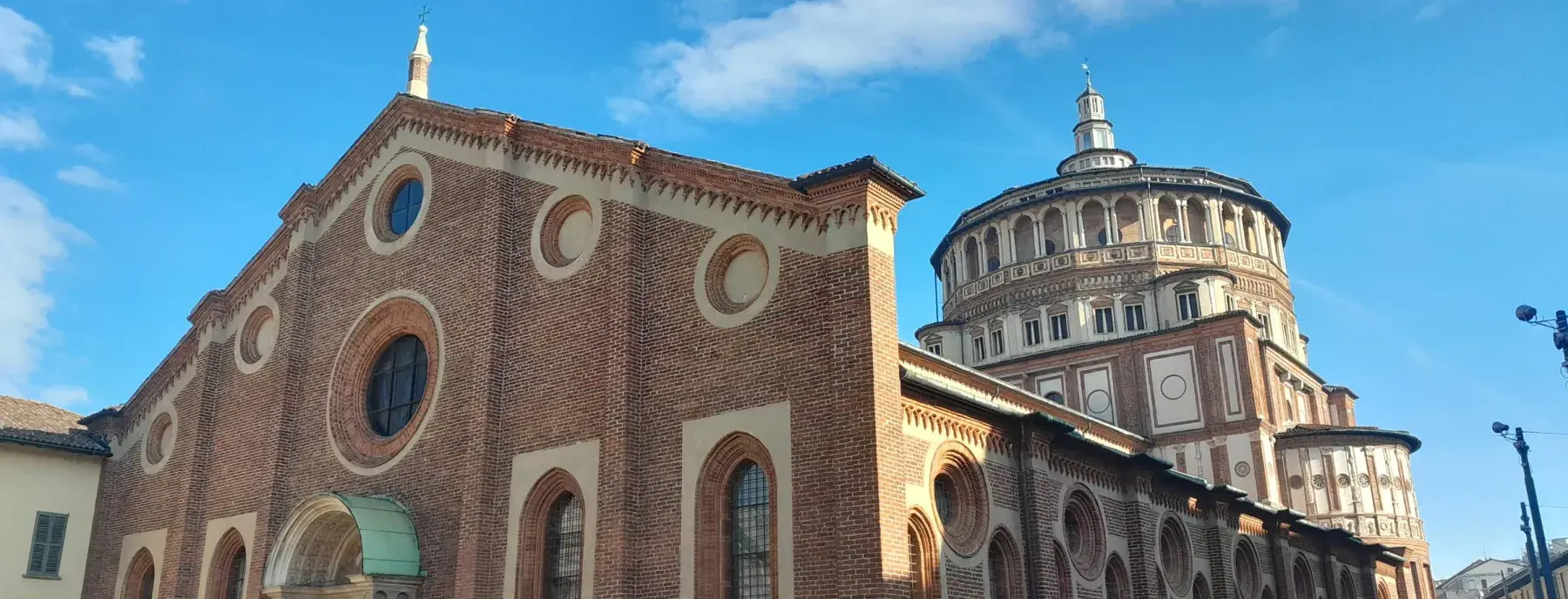
Santa Maria delle Grazie is in the Magenta neighbourhood of Milan, about a ten-minute walk from the Duomo or a short metro ride on the M1 line (Cadorna or Conciliazione stops). The church itself is a UNESCO World Heritage Site and worth your attention — its apse, designed partly by Bramante, is one of the finest Renaissance architectural spaces in northern Italy. Allow at least twenty minutes for the church before or after your visit to the refectory.
The Museo Nazionale della Scienza e della Tecnologia Leonardo da Vinci is a five-minute walk away and contains an extensive collection of models built from Leonardo's own notebooks — his flying machines, water systems, military engineering. It is an excellent complement to the painting for visitors interested in Leonardo's work beyond the art, and particularly good for visitors travelling with children. Plan half a day for the Last Supper plus its surrounding neighbourhood: the Magenta area has good cafés and is one of the more residential, less touristy parts of central Milan.
You get fifteen minutes in front of one of the greatest paintings ever made. Knowing what to look for turns those fifteen minutes into something you'll carry for the rest of your life.
In this article
Make it real
Explore our tours in Italy

