Private tour in Milan of Leonardo da Vinci's Last Supper with skip-the-line tickets
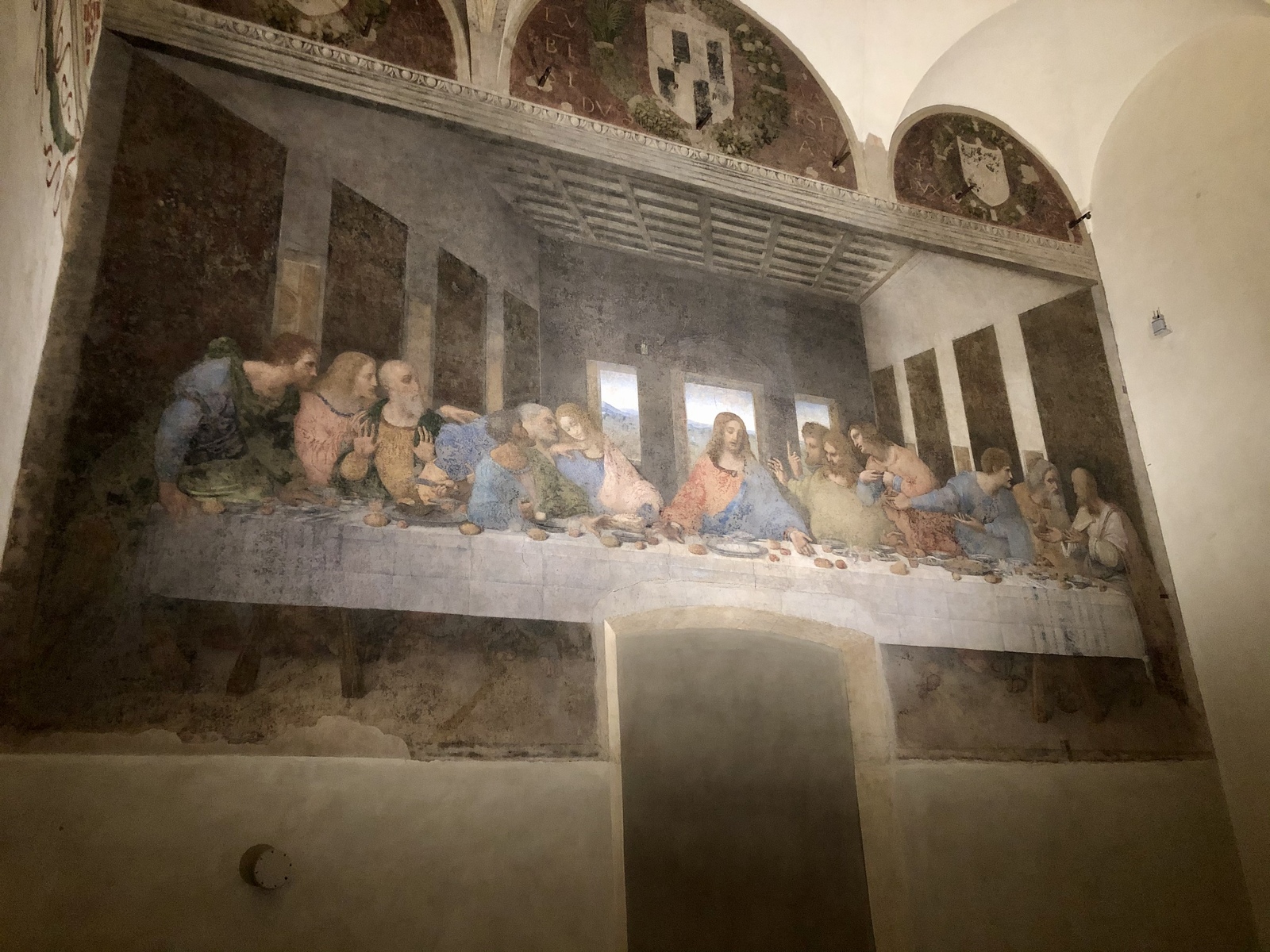
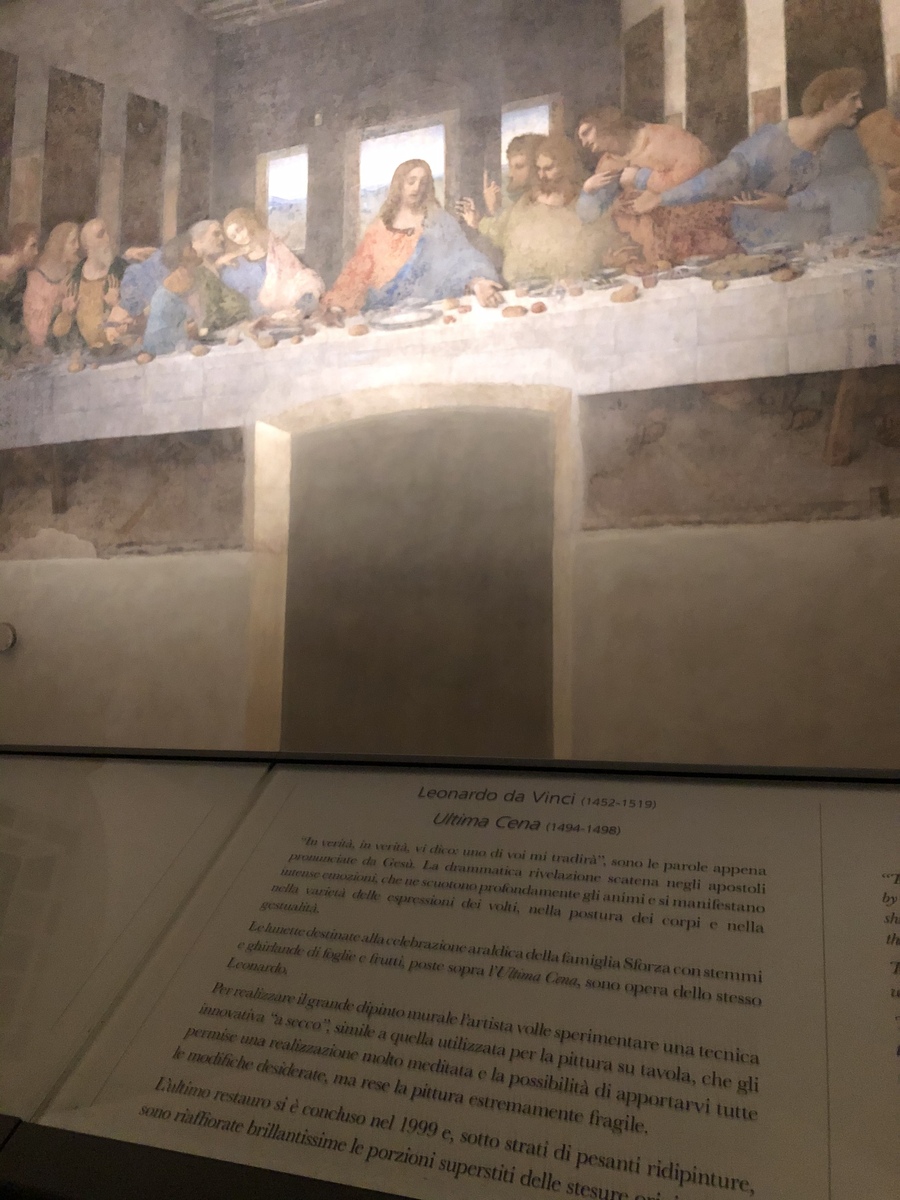
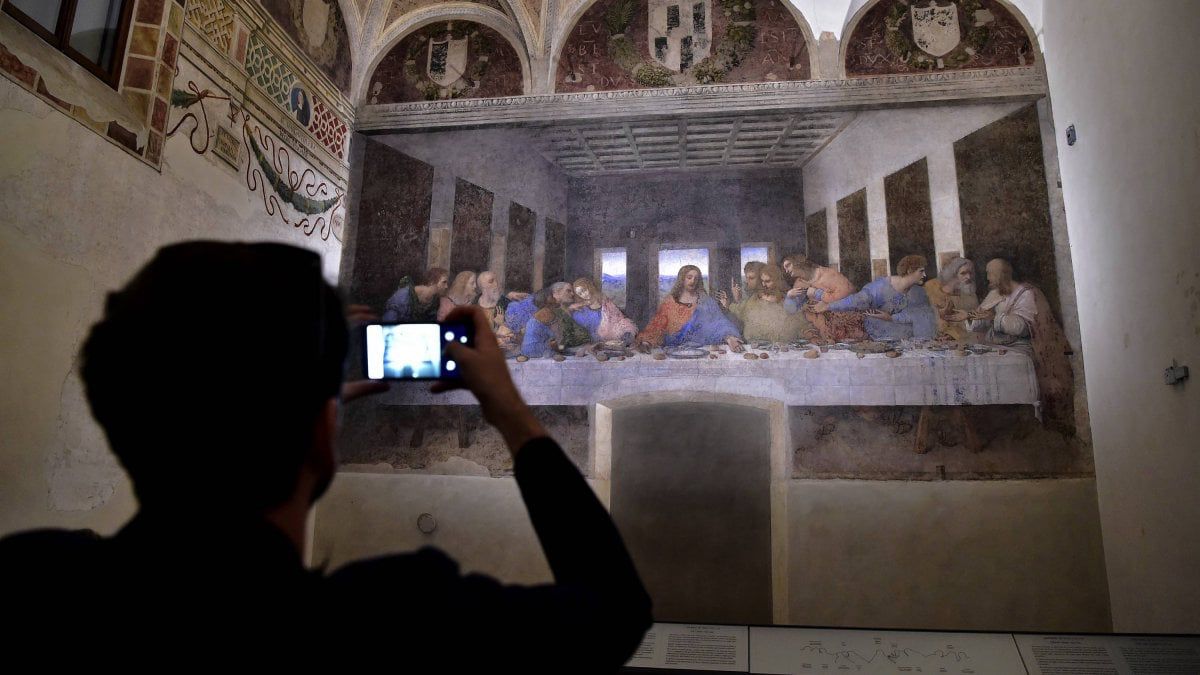
Admire one of the masterpieces of Renaissance art with this private tour of Milan with priority access to Santa Maria delle Grazie, where the painting is kept. Let an expert guide accompany you and face with The Last Supper for a full fifteen minutes!
- Discover Leonardo's masterpiece, UNESCO World Heritage Site: The Last Supper
- Get priority access tickets and avoid long queues
- Listen to the narration of an expert guide
- Contemplate the beauty of the fresco
- Enjoy a once-in-a-lifetime experience
Meeting Point
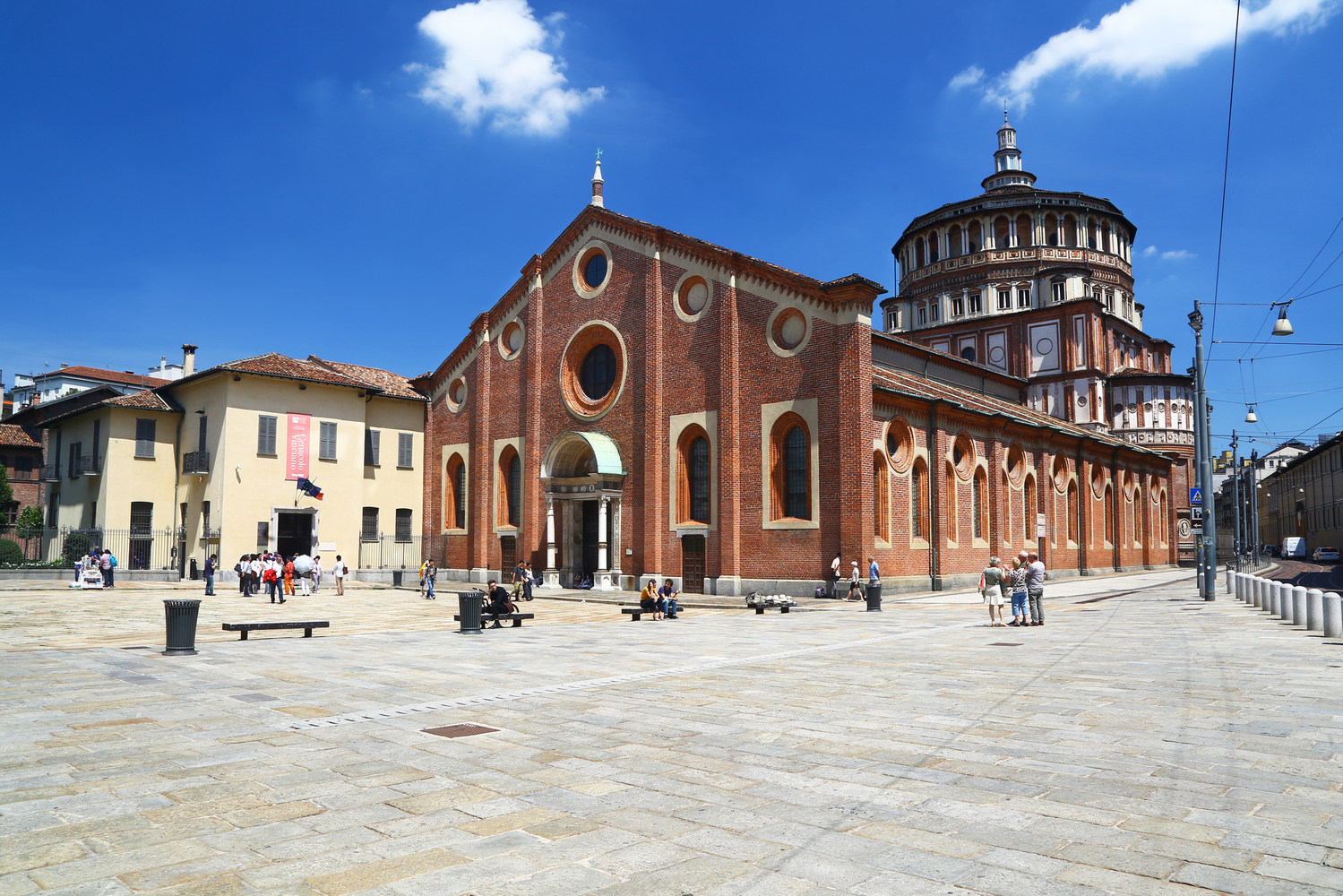
Meet our tour leader in Piazza Santa Maria delle Grazie, in front of Santa Maria delle Grazie Church.
What is the Last Supper and why is it considered one of the greatest paintings in history?
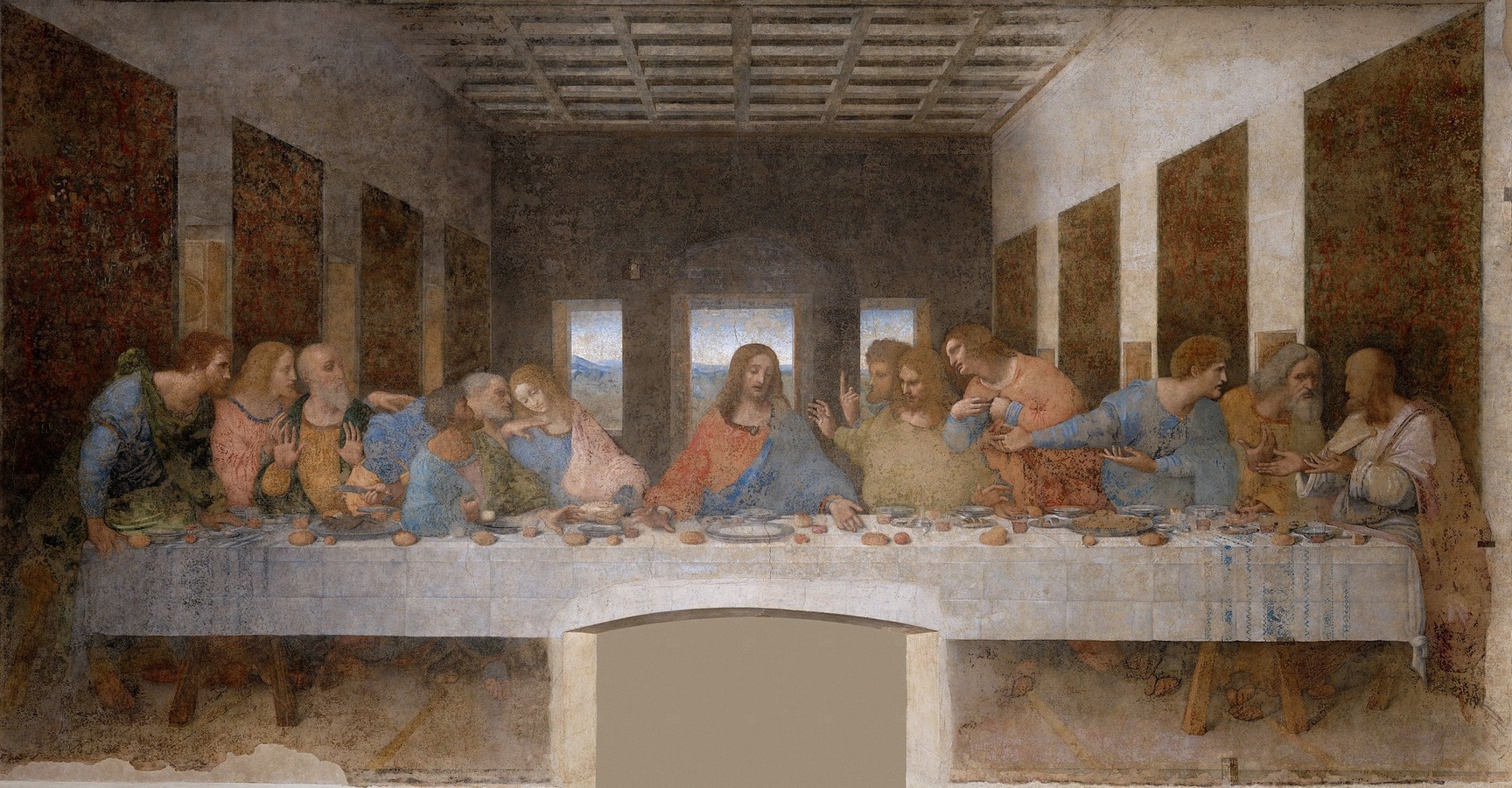
Leonardo da Vinci's Last Supper is a monumental mural painting created between approximately 1495 and 1498 in the refectory (dining hall) of the Convent of Santa Maria delle Grazie in Milan. It depicts the moment described in the Gospel of John (13:21) when Jesus announces to his twelve disciples that one of them will betray him — the instant of maximum emotional tension at the table. What makes it one of the greatest paintings in history is Leonardo's revolutionary approach to representing that moment. Rather than showing a static ceremonial scene (as earlier treatments of the subject had done), Leonardo depicts each apostle reacting individually, with a different gesture, expression, and emotional response — creating a psychological drama of extraordinary complexity and humanity. The composition, the light, the perspective, and the characterisation of each figure were all unprecedented. The painting defined how the Last Supper would be depicted for the next five centuries.
Where exactly is the Last Supper located in Milan and why are tickets so hard to get?
Leonardo da Vinci's Last Supper is located in the refectory of the Convent of Santa Maria delle Grazie, in the Magenta neighbourhood of central Milan. The refectory is a separate building attached to the right side of the church. Access to the painting is strictly controlled: the room admits only 25 visitors at a time for a 15-minute viewing window, with visits timed to minimise the impact of human presence on the fragile painting's conservation environment. This means that daily capacity is extremely limited — well under 1,500 visitors per day — for one of the most sought-after cultural experiences in Italy. Tickets sell out weeks or months in advance during peak season, and walk-in access is essentially impossible. The private guided tour format offered by specialist operators provides guaranteed access with a specialist art historian guide, bypassing the general public ticket system.
Is the Last Supper a fresco, and why was Leonardo's experimental technique so risky?
Contrary to popular assumption, the Last Supper is not a fresco. A true fresco is painted onto wet plaster, and the pigments bond chemically with the wall as it dries — producing a durable surface that can survive centuries. Leonardo, however, was unwilling to work at the speed that fresco painting demands (wet plaster dries in a matter of hours, requiring the artist to work quickly and without revision). He wanted the precision and subtlety of tempera painting — the ability to layer colour gradually, to make corrections, to work slowly with fine detail. So he painted the Last Supper on a dry plaster wall sealed with a layer of ground stone and gesso, using a mixture of oil and tempera pigments. The technique allowed him the precision he needed, but it proved catastrophically fragile: within twenty years of completion, the painting had already begun to deteriorate, and its entire subsequent history has been one of progressive damage, attempted restoration, and conservation.
Who are the twelve apostles depicted in the Last Supper, and what emotions does Leonardo show in each?
Leonardo groups the twelve apostles into four groups of three on either side of Christ, each group arranged to create a visually dynamic composition. From left to right: Bartholomew, James the Less, and Andrew — the leftmost group, reacting with shock and disbelief; Judas (reaching for the bread, his face darkened by shadow), Peter (leaning toward Christ with a knife), and John (the youngest figure, leaning away from Peter) — the group closest to Christ on his right; Thomas, James the Greater, and Philip — on Christ's immediate left, with Philip pressing his hands to his chest in protest; and Matthew, Thaddaeus, and Simon — the rightmost group, engaged in agitated discussion. Each figure's gesture, expression, and posture communicates a distinct psychological state. Judas alone does not look toward Christ — he leans back, his face partly in shadow, his hand moving toward the bread in a gesture of guilt. The painting is essentially a study of twelve different responses to a single devastating announcement.
What is Santa Maria delle Grazie and why is it a UNESCO World Heritage Site?
Santa Maria delle Grazie is a late 15th-century church and Dominican convent in the Magenta neighbourhood of central Milan. The church was substantially rebuilt between 1492 and 1497 by Bramante — one of the greatest architects of the Italian Renaissance — who added the magnificent tribune (the large domed apse) that dominates the building's exterior. Ludovico Sforza, Duke of Milan and Leonardo da Vinci's patron during this period, intended the complex to serve as the Sforza family mausoleum. It was during this period that Leonardo was commissioned to paint the Last Supper in the adjacent refectory. Santa Maria delle Grazie was inscribed on the UNESCO World Heritage List in 1980, along with Leonardo's Last Supper, specifically in recognition of the exceptional artistic and historical value of Leonardo's mural. The UNESCO inscription emphasises that the church and the painting together form an outstanding example of the cultural flowering of the Italian Renaissance under Sforza patronage.
What is the cancellation policy?
For groups of 1 to 8 people, a full cancellation fee applies if you cancel within 7 days of your tour date or in case of no-show. For groups of 9 or more, availability and cancellation terms are available on request.


Starting from
price per person
based on a group of 4