Exclusive private cooking class of gelato and pizza in the centre of Milan
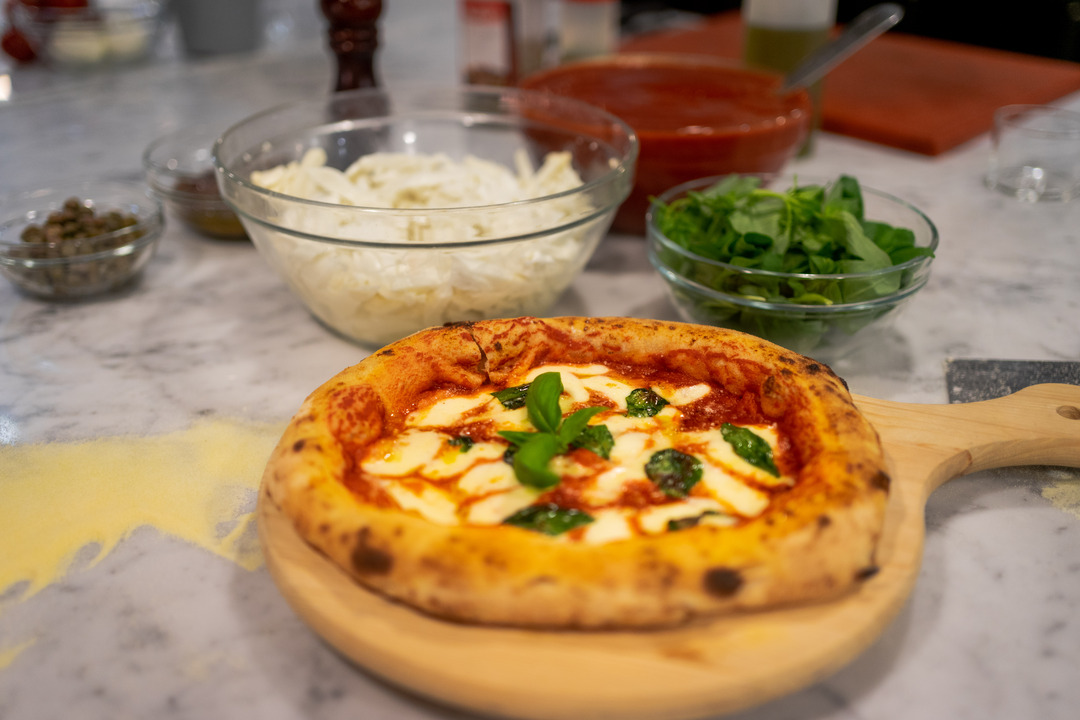
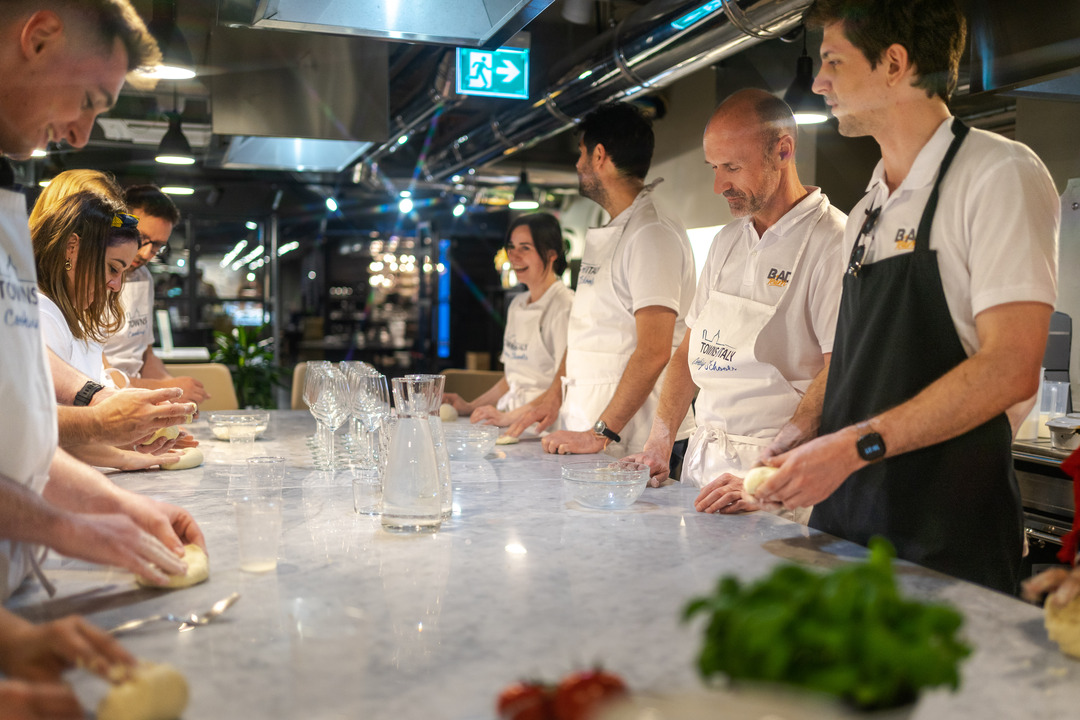
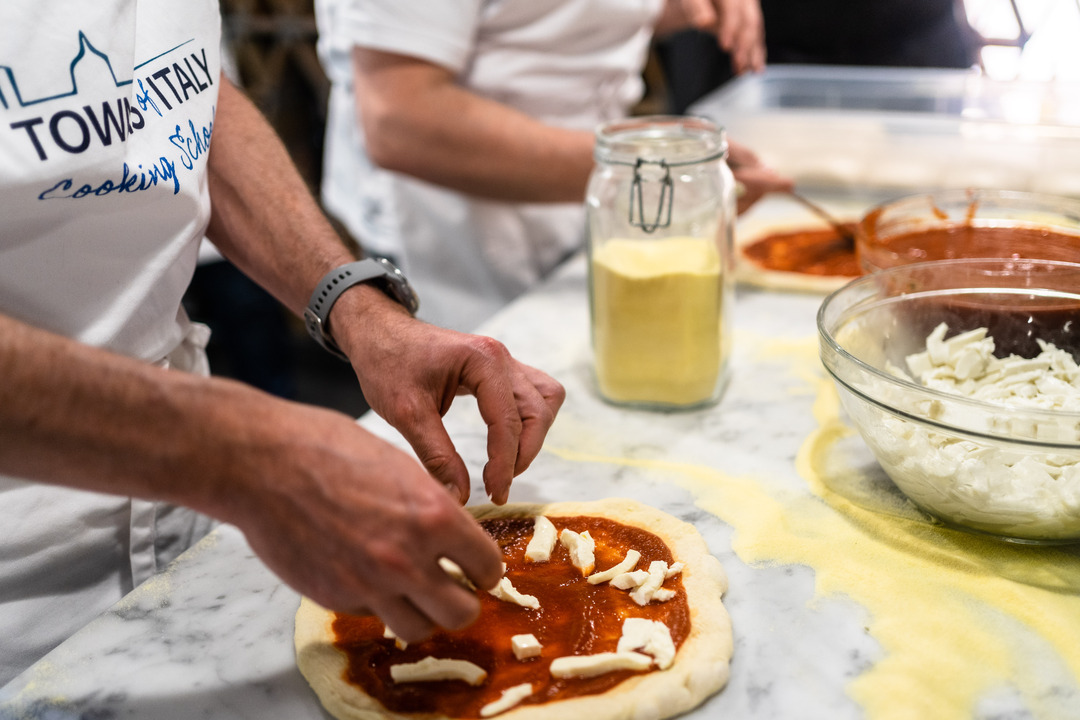
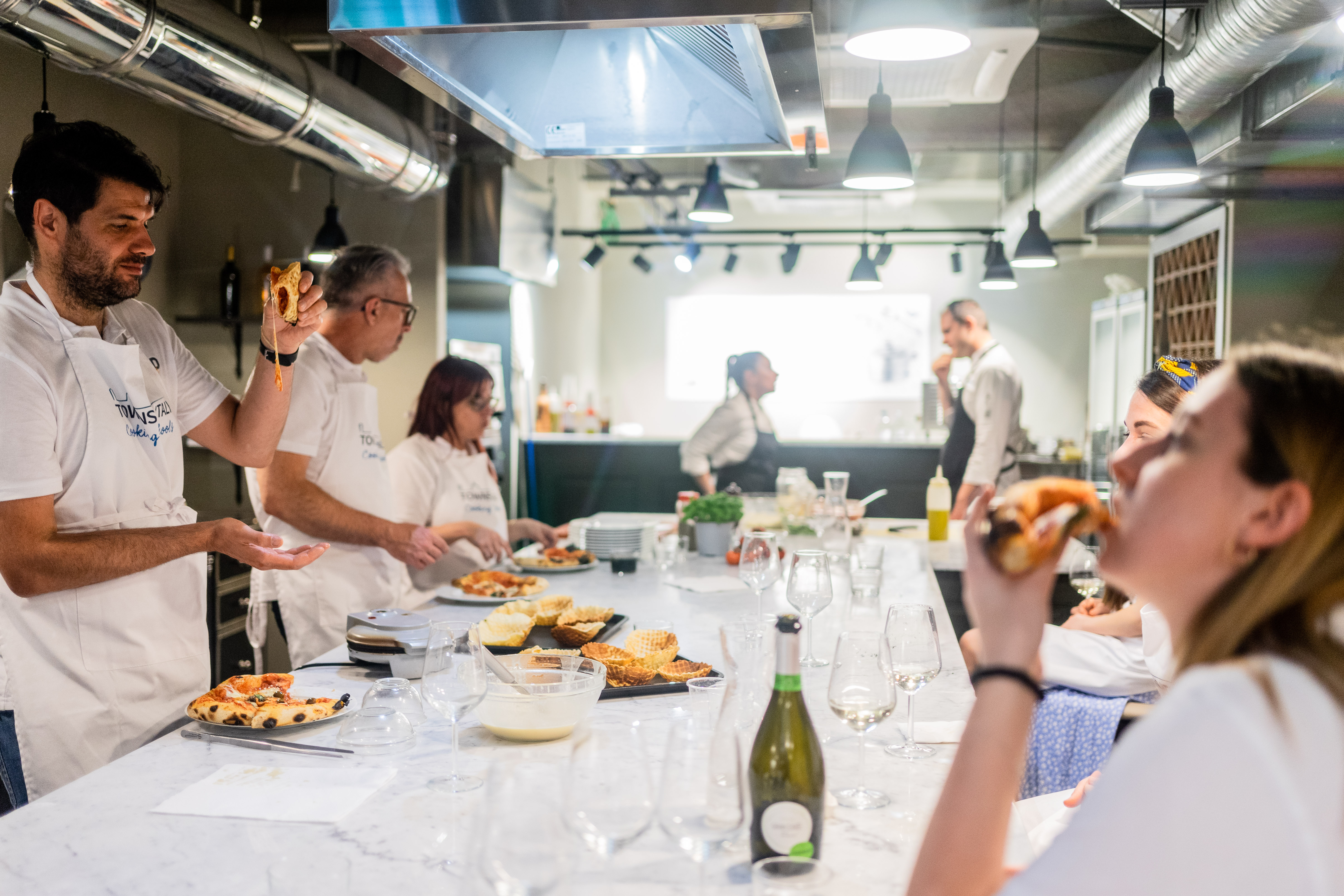
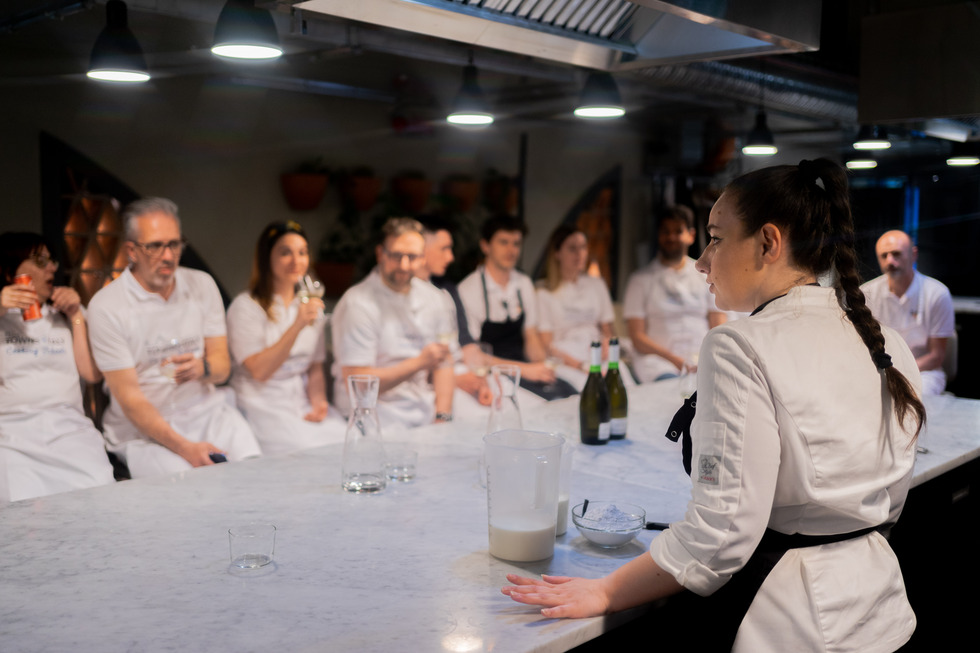
'Italians do it better' is much more than a figure of speech. And it is certainly true when we talk about tasty pizza and creamy artisanal gelato. Join the best private cooking class in Milan and discover the secrets behind two of Italy’s most iconic recipes. This private cooking class will teach you how to make pizza and ice cream to perfection in a fun way and you can have a digital recipe book to replicate the dishes with friends and family!
- Follow the directions of an expert pizza chef to create a delicious pizza
- Get hands-on experience, you'll be actively involved in every step of the cooking process,
- Mix ingredients and make your own ice cream!
- Taste your delicious culinary creations
- Get a digital recipe booklet to impress friends and family
Meeting Point
TOWNS OF ITALY COOKING SCHOOL & TOURIST HUB
Via Giovanni Battista Sammartini 1 (corner piazza IV Novembre) next to Central Rail Station.
Towns of Italy Cooking School &Tourist Hub is located inside the CENTRAL MARKET ON first floor (1 floor UP from the ground floor).
What makes Neapolitan pizza so different from pizza made outside Italy?
Authentic Neapolitan pizza — the style that defines Italian pizza making — is governed by strict production rules laid down by the Associazione Verace Pizza Napoletana, a body whose standards have been recognised by the Italian government and by UNESCO, which inscribed the art of Neapolitan pizza making on its Intangible Cultural Heritage list in 2017. The differences from most pizza made outside Italy are fundamental. The dough uses only four ingredients: flour, water, salt, and yeast — no oil, no sugar, no preservatives — and is fermented for a minimum of 24 hours. It is stretched by hand, never with a rolling pin, to produce the characteristic irregular shape and cornicione (raised edge). It is cooked in a wood-fired oven at 430–480°C for 60–90 seconds. The result is a pizza whose base is simultaneously crispy at the edge and soft, charred and light in the centre — a texture and flavour profile that is essentially impossible to replicate in a conventional domestic oven.
What is the difference between artisanal Italian gelato and industrial ice cream?
Artisanal Italian gelato and industrial ice cream differ in three fundamental ways: ingredients, air content, and serving temperature. Industrial ice cream typically contains stabilisers, emulsifiers, artificial flavourings, and significantly more cream and sugar than artisanal gelato. More importantly, it is churned at high speed to incorporate a large volume of air — sometimes up to 100% overrun, meaning half the volume of the product is air. Artisanal gelato contains much less air (typically 20–30% overrun), making it denser, heavier, and more flavour-intense per spoonful. It is also served at a warmer temperature than ice cream — around -10°C to -12°C rather than the -18°C of commercial ice cream — which gives it a softer, more yielding texture. Finally, artisanal gelato uses fresh, seasonal, high-quality ingredients, and its flavours are made daily in small batches: the taste of the strawberry in a properly made strawberry gelato is the taste of real strawberries, not a manufactured approximation.
What are the secrets of a perfect pizza dough that participants learn in the class?
The pizza dough class reveals that perfect pizza dough is the result of understanding a small number of variables and controlling them precisely. The key elements taught in the class are: the choice of flour (the protein content of the flour determines how the gluten develops and how the dough behaves in the oven — high-protein Tipo 00 flour is standard for Neapolitan pizza); the hydration ratio (the proportion of water to flour, which determines the dough's extensibility and final texture); the fermentation time and temperature (longer, cooler fermentation produces a more flavourful, more digestible dough); and the technique for shaping by hand (stretching without tearing, creating the characteristic cornicione, working without a rolling pin). Participants also learn why most home pizza attempts fail — typically due to under-fermented dough, insufficient oven heat, or rolling rather than stretching — and how to correct these problems in their own kitchens.
Is this pizza and gelato cooking class in Milan suitable for children and families?
Yes — this cooking class is specifically designed to be accessible and enjoyable for participants of all ages, including children and families. The activities involved — kneading and shaping dough, choosing pizza toppings, mixing gelato ingredients — are engaging and tactile for younger participants, and the format of the class keeps energy levels high throughout. There are no complex techniques that require previous cooking experience, and the instructors are experienced in adapting the pace and level of instruction to the group. Families often find that cooking classes are among the most memorable shared experiences of their trips — everyone contributes, everyone eats together, and the results are immediately visible and delicious. The class can be adapted for participants with dietary requirements, including gluten-free options where available. Please specify the number and ages of children when booking.
Can participants take the recipes home after the class?
Yes — all participants receive the full recipes for the pizza and gelato prepared during the class, so they can recreate what they have learned in their own kitchens at home. The recipes are provided in written form at the end of the session, typically accompanied by notes on the key techniques and tips for adapting the preparation to home conditions (where you will not have access to a professional wood-fired oven or a commercial gelato churn). Part of what the class teaches is precisely how to adapt professional Italian techniques to the domestic environment — including how to achieve the best possible result in a standard home oven, what to look for when buying flour and other ingredients, and how to scale the recipes up or down for different numbers of people. Many participants report that recreating these dishes at home — and serving them to family and friends — is one of the lasting memories of their trip to Italy.
What is the cancellation policy?
For groups of 1 to 8 people, a full cancellation fee applies if you cancel within 7 days of your tour date or in case of no-show. For groups of 9 or more, availability and cancellation terms are available on request.


Starting from
price per person
based on a group of 4