Private pasta and tiramisù cooking Class in the heart of Milan
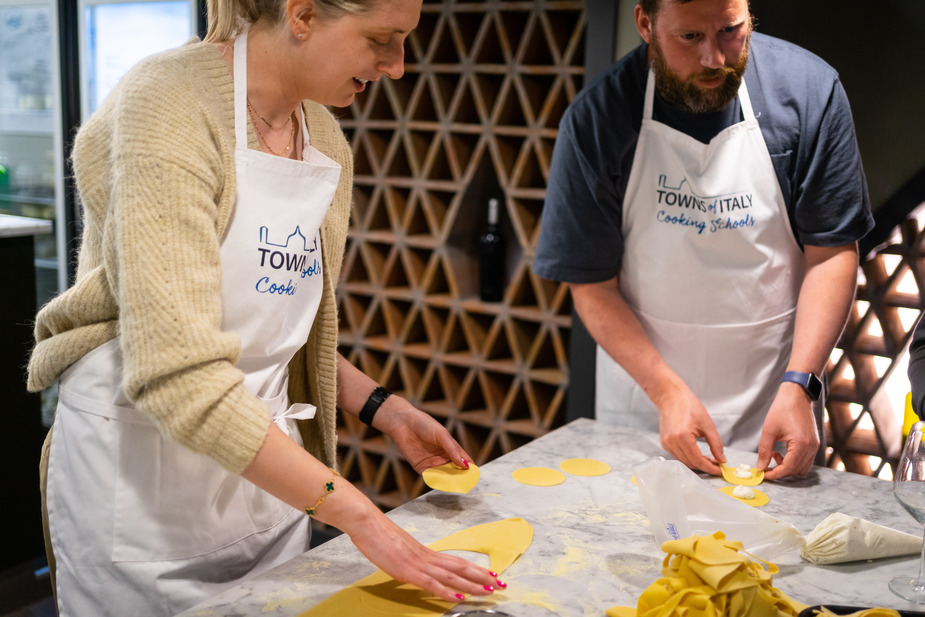
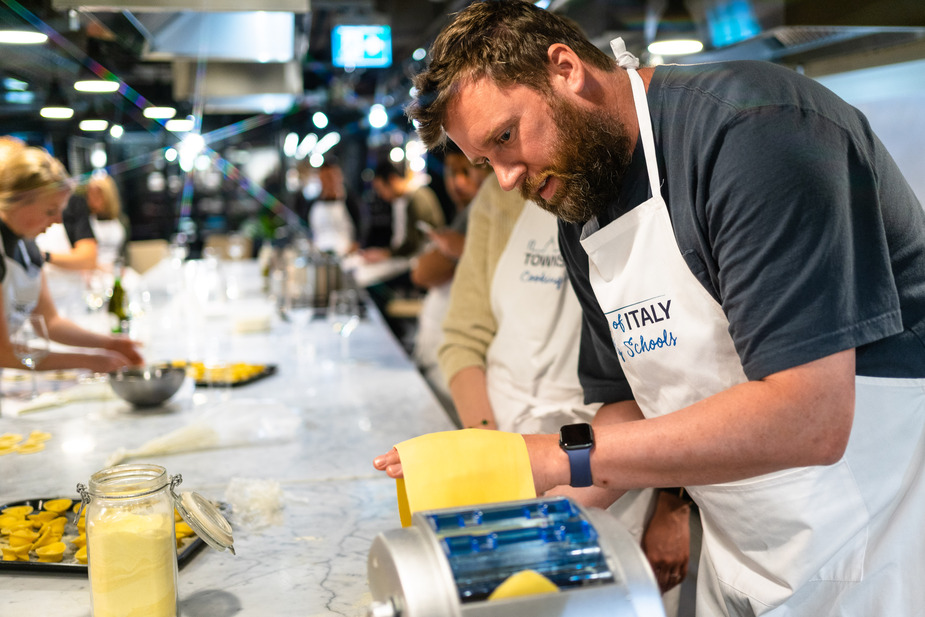
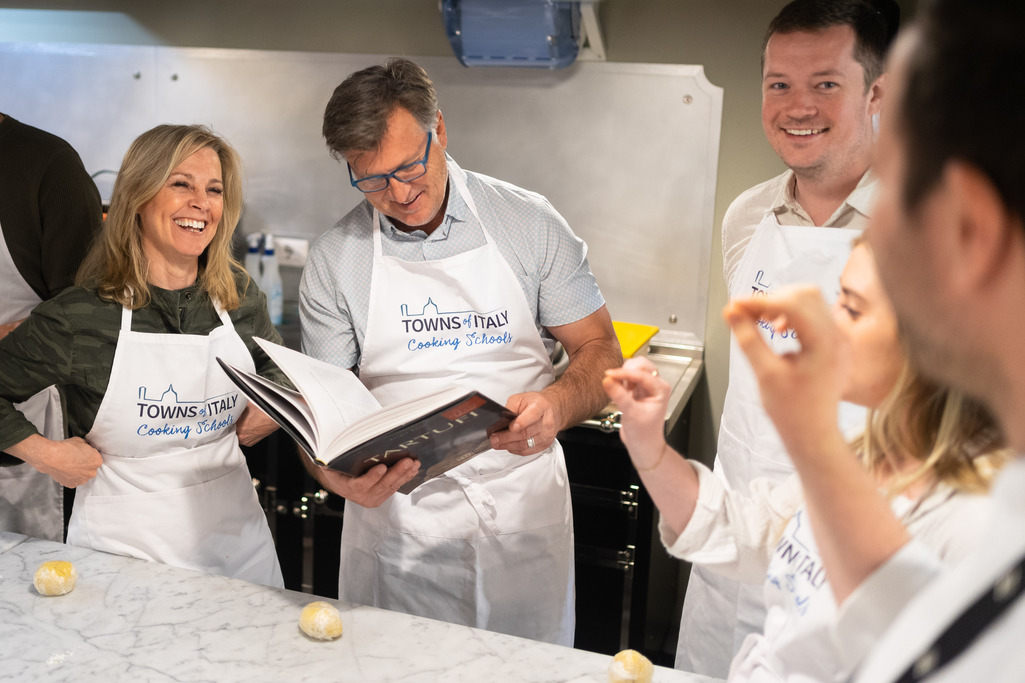
Choose this private culinary journey in Milan tailored just for you, your family, or your group. Under the personalized guidance of an expert chef, you’ll master the art of creating Italy’s most iconic dishes—handmade pasta and gelato—while enjoying an intimate and engaging experience.
- Craft fresh handmade pasta, shaping it into traditional forms
- Enhance your dishes with two flavorful seasonal sauces
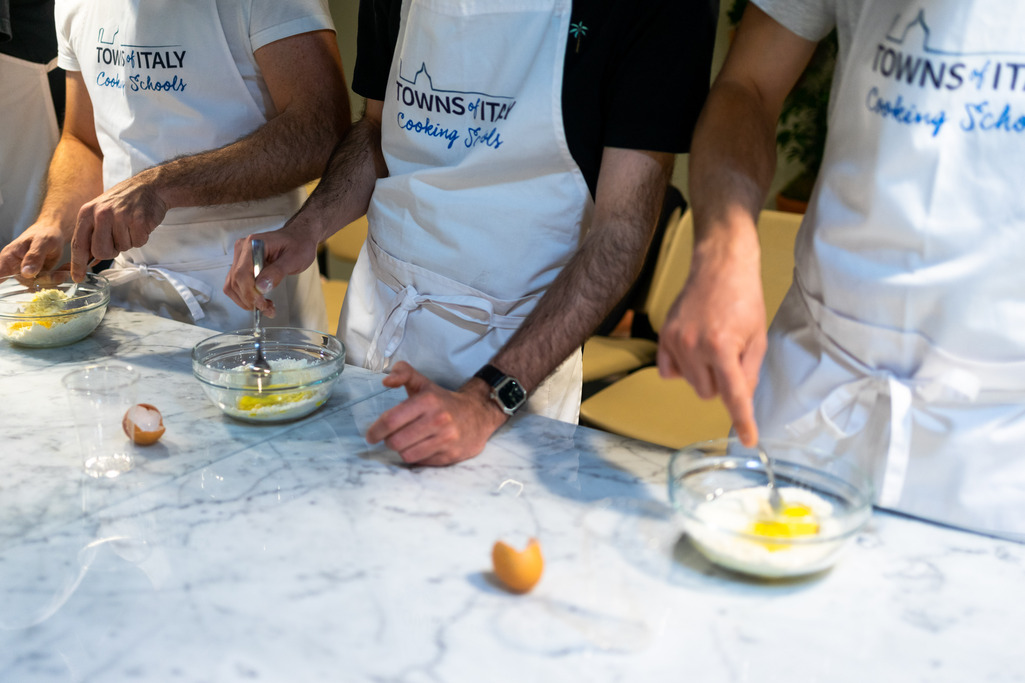
- Be guided from your private chef's expert tips to make perfect tiramisù
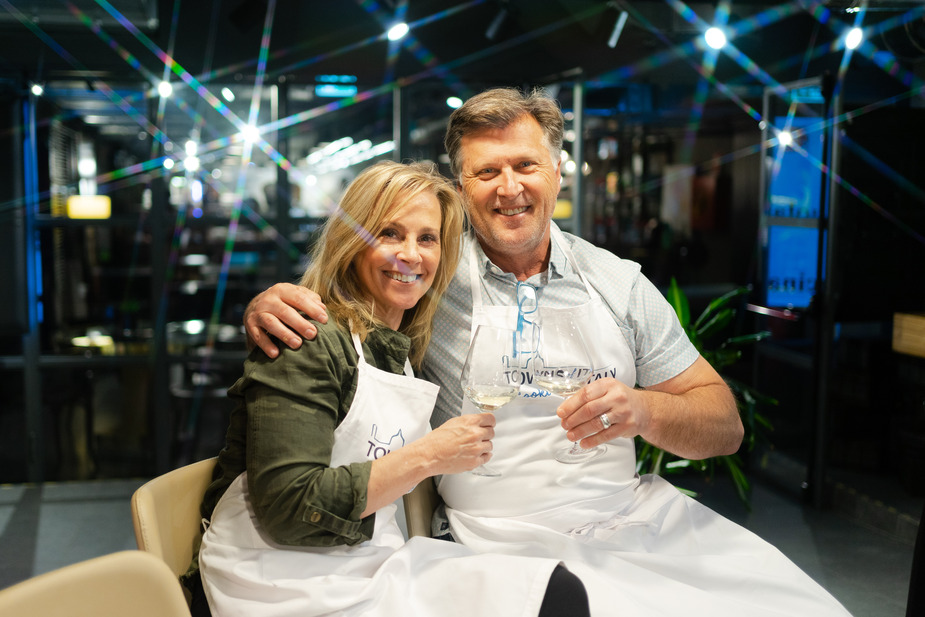
- Savor your culinary creations in a private setting, paired with premium Italian wine
- Take home a personalized digital recipe booklet and a Graduation Certificate
Meeting Point
TOWNS OF ITALY COOKING SCHOOL & TOURIST HUB
Via Giovanni Battista Sammartini 1 (corner piazza IV Novembre) next to Central Rail Station.
Towns of Italy Cooking School &Tourist Hub is located inside the CENTRAL MARKET ON first floor (1 floor UP from the ground floor).
What are the main differences between northern Italian pasta and southern Italian pasta?
Italy's pasta culture divides sharply along the Apennine mountain range, and the differences between northern and southern pasta traditions reflect the agricultural history, climate, and cooking culture of each region. Northern Italy — including Lombardy, Piedmont, and Emilia-Romagna — produces pasta made with egg: fresh pasta (pasta fresca) in which durum wheat flour is combined with eggs to create a rich, supple dough that is rolled thin and cut into shapes like tagliatelle, pappardelle, and maltagliati, or folded around fillings to make tortellini, ravioli, and agnolotti. Southern Italy — including Campania, Apulia, and Sicily — uses pasta made without egg: dried pasta (pasta secca) from semolina flour and water only, extruded into forms like spaghetti, rigatoni, and orecchiette. Egg pasta cooks quickly and pairs with butter-based or cream-based sauces typical of northern Italian cuisine; semolina pasta is harder, takes longer to cook, and pairs better with the robust tomato and olive oil sauces of the south.
What is tiramisù, where was it invented, and what makes an authentic version?
Tiramisù is Italy's most internationally recognised dessert — a no-bake confection of savoiardi (ladyfinger biscuits) soaked in espresso, layered with a cream of mascarpone, eggs, and sugar, and dusted with cocoa powder. Its origins are disputed, but the most widely accepted account credits the restaurant Le Beccherie in Treviso (in the Veneto region) with its invention in the early 1970s, where it was created by pastry chef Roberto Linguanotto. The name means literally 'pick me up' — a reference to the energising combination of espresso and sugar. An authentic tiramisù is made with raw eggs (the yolks beaten with sugar and combined with mascarpone, the whites whipped to stiff peaks and folded in separately), real espresso, and high-quality mascarpone — a rich, fresh cream cheese produced in Lombardy. The result should be a dessert that is simultaneously rich and light, with a clearly defined bitter note from the espresso and cocoa.
What specific pasta-making techniques will participants learn in this Milan cooking class?
The pasta-making section of this Milan cooking class focuses on fresh egg pasta — the northern Italian tradition — and teaches the core techniques that underpin all fresh pasta production. Participants learn how to make pasta dough by hand: measuring and combining the flour and eggs, working the dough until smooth and elastic, and resting it before rolling. The class then teaches two rolling methods: by hand with a rolling pin (the traditional approach, which develops a feeling for the dough and its texture) and with a pasta machine (the practical method for home use). From the rolled sheet, participants learn to cut different shapes — typically tagliatelle and one filled pasta such as ravioli or tortellini — including the folding and sealing techniques that prevent the filling from escaping during cooking. The class also covers how to read the dough: how to tell when it is properly rested, properly rolled, and properly cooked.
Is this cooking class suitable for complete beginners with no prior experience in Italian cooking?
Yes — this pasta and tiramisù class is specifically designed for participants with no prior experience in Italian cooking, or indeed in cooking of any kind. The recipes and techniques taught are foundational: fresh egg pasta and tiramisù are among the most accessible preparations in the Italian culinary repertoire, and the class format is structured so that each step is demonstrated by the instructor before participants attempt it themselves. There is no pressure to produce a perfect result on the first attempt — the class is as much about understanding the principles behind the recipes as about the finished dish. Participants with more cooking experience can use the class to deepen their understanding of techniques they may have attempted at home; beginners will leave with a clear grasp of what they have made and the confidence to try it again. The class is conducted in a professional kitchen but pitched at an accessible level throughout.
What wines pair best with fresh handmade pasta in northern Italian cuisine?
Northern Italian fresh egg pasta dishes call for wines that share their richness and texture without overwhelming the delicacy of the pasta itself. In Lombardy, where this class takes place, the local wine traditions offer excellent pairings. Tagliatelle with butter and sage — a classic northern preparation — pairs beautifully with a light, crisp white wine: a Lugana from the shores of Lake Garda, a Soave from the Veneto, or a Franciacorta sparkling wine from Lombardy itself. Filled pasta with a meat filling — tortellini in brodo or ravioli with a rich ragù — suits a medium-bodied red: a Barbera d'Asti from Piedmont, a Valpolicella from the Veneto, or a Bonarda from Oltrepò Pavese. Pasta with a cream or truffle sauce — typical of northern Italian winter cooking — pairs with a structured white such as a white Burgundy, a Verdicchio dei Castelli di Jesi, or — for the most opulent pairing — a Barolo served slightly cool.
What is the cancellation policy?
For groups of 1 to 8 people, a full cancellation fee applies if you cancel within 7 days of your tour date or in case of no-show. For groups of 9 or more, availability and cancellation terms are available on request.


Starting from
price per person
based on a group of 4