Private Florence guided tour with visit of the Dome and exclusive access to its terraces
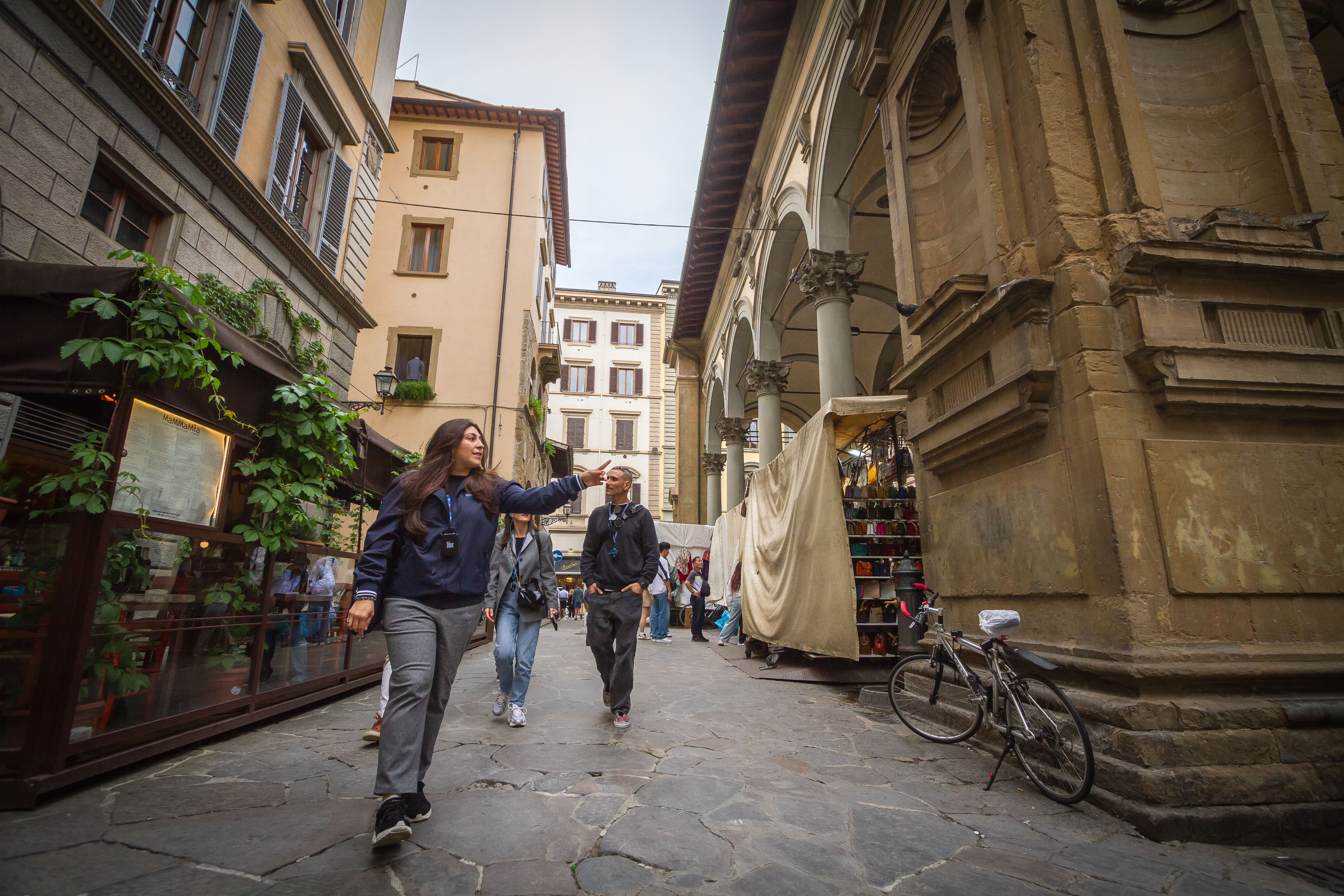
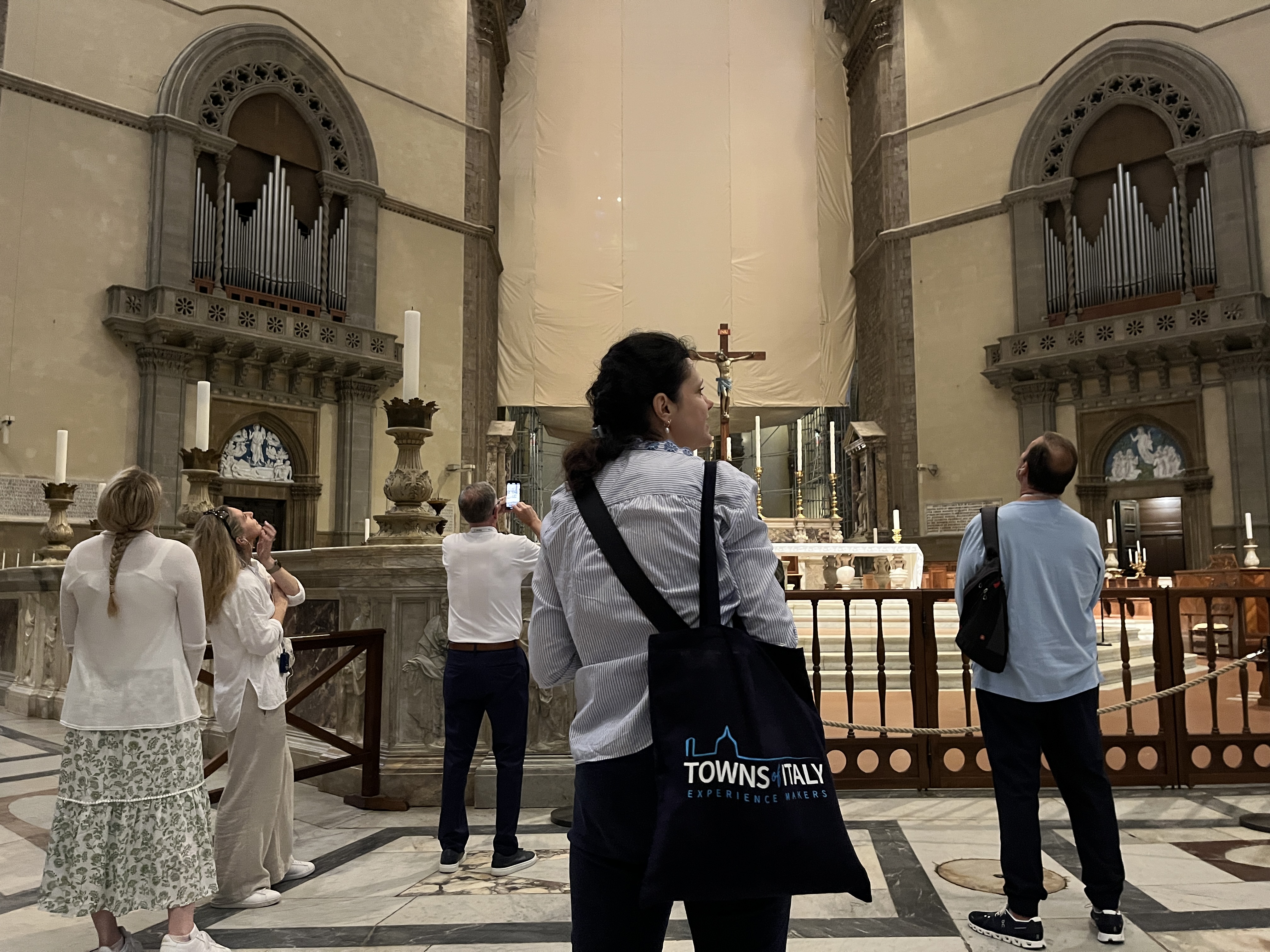
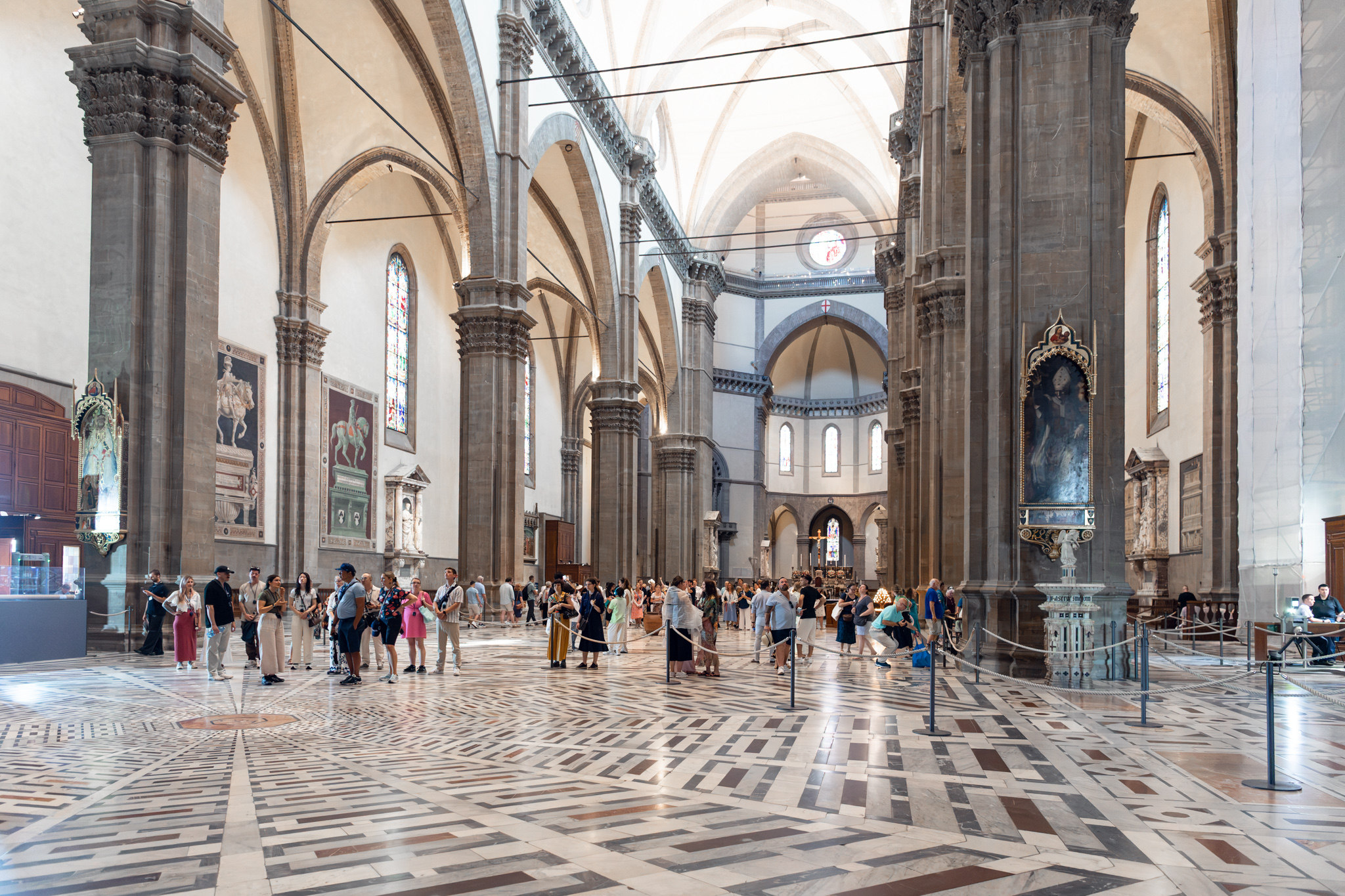
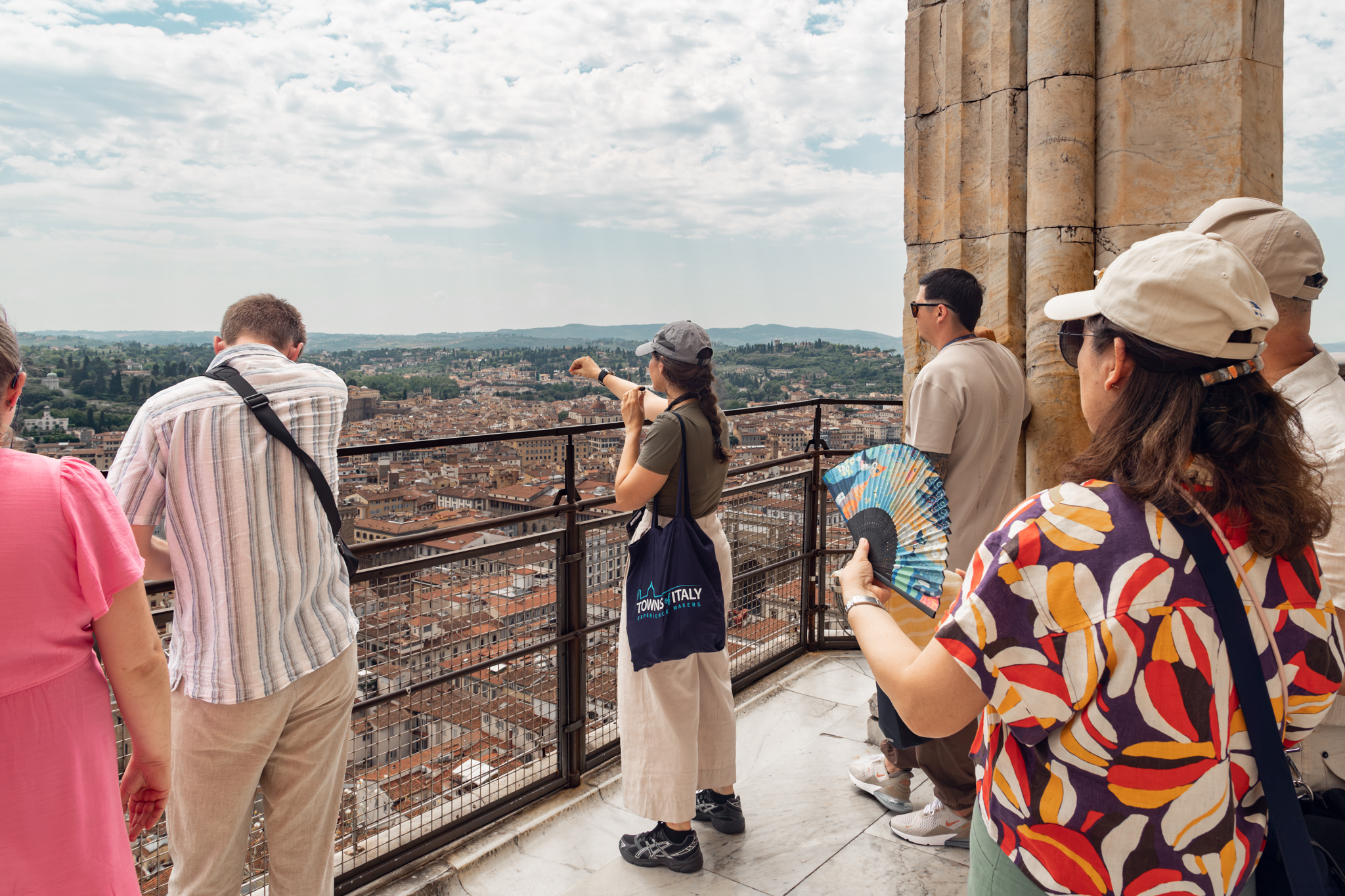
Experience Florence’s architectural splendor and artistic heritage with a private guided tour tailored exclusively for you. Explore the city’s historic center, step inside the iconic Cathedral, and ascend Brunelleschi’s Dome for unparalleled views—all at your own pace, with personal attention from a knowledgeable guide.
- Discover Florence’s historic landmarks with a private guide
- Enjoy personalized skip-the-line access to the Duomo’s artistic treasures
- Admire Uccello’s unique clock and Vasari’s awe-inspiring frescoes
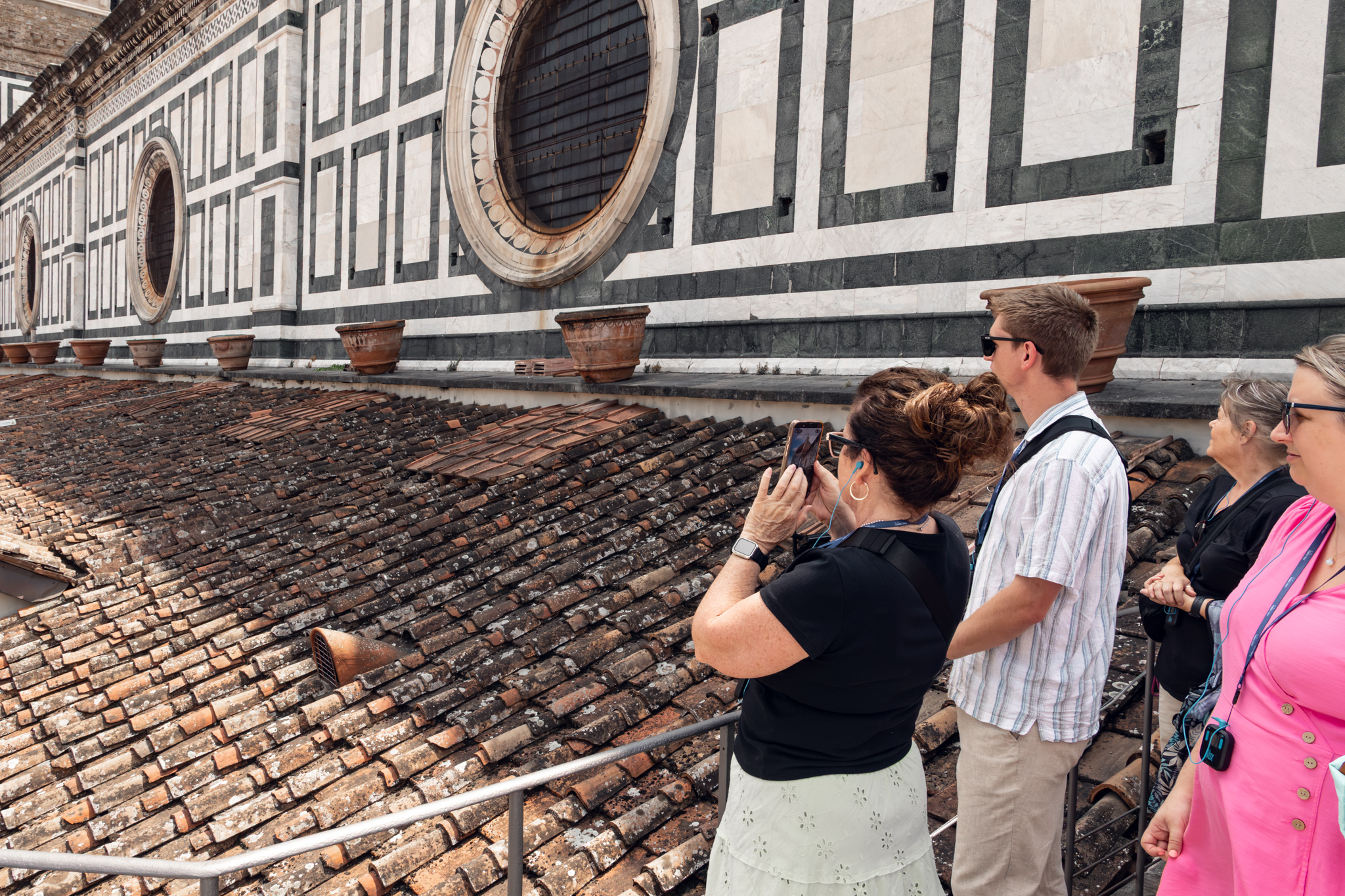
- Ascend to the exclusive Duomo Terraces for stunning city views
- Climb Brunelleschi's Dome for an unforgettable 360° panorama
Meeting Point
This is a combination of two different tours, with a break between the activities. Meet you tour guide at the Towns of Italy Kiosk, in Piazza della Repubblica, under the arches on the left facing the Apple Store for both tours.
Please make sure to be there 15 minutes before the scheduled departure time.
Meet your tour leader in front of the Towns of Italy Kiosk, in Piazza della Repubblica, under the arches on the left facing the Apple Store.
Why is Brunelleschi's Dome considered the greatest architectural achievement of the Renaissance?
When Filippo Brunelleschi completed the dome of Santa Maria del Fiore in 1436, he solved a construction problem that had remained unsolved for over a century and produced a structure that has never been surpassed for its combination of engineering ambition and architectural beauty. The dome spans 43.7 metres — wider than the Pantheon in Rome — and rises to a height of 114.5 metres above street level. Its most revolutionary feature is the double-shell construction: two concentric shells, each supporting the other, built simultaneously without the external wooden scaffolding (centering) that all previous large domes had required. Brunelleschi invented entirely new machines to execute the construction — cranes, hoists, and a system of herringbone brick laying that made the structure self-supporting at every stage. When it was complete, no architect in Europe knew how he had done it. His methods were so novel that he kept them secret. The dome defined the Florence skyline for six centuries and inspired every major domed structure that followed, including St Peter's Basilica in Rome.
What are the Duomo Terraces and what makes them exclusive compared to the standard Dome climb?
The Duomo Terraces are the external walkways at the base of the drum of Brunelleschi's Dome — the level just below where the dome itself begins to rise. Accessed via a separate staircase inside the cathedral, they offer a remarkable and rarely visited vantage point: you are standing on the exterior of one of the world's greatest buildings, at a height that places you well above most of Florence, with the full mass of the dome rising directly above you and the historic city spreading out below. The terraces are less physically demanding than the full climb to the lantern at the top of the dome (463 steps vs. 463, depending on which access point you use), but they offer one of the most dramatic architectural perspectives in the city. Private guided access to the terraces often includes areas and explanations unavailable on self-guided visits, making the experience both richer and more exclusive.
Who painted the Last Judgment frescoes inside Brunelleschi's Dome and what do they depict?
The interior of Brunelleschi's Dome is covered by one of the largest fresco cycles in the world: the Last Judgment, covering approximately 3,600 square metres across the eight triangular sections of the dome's interior surface. The work was begun by Giorgio Vasari — the famous painter, architect, and biographer of artists — in 1572, when he was already in his sixties. Vasari died in 1574 before completing the commission, and the work was finished by Federico Zuccari between 1576 and 1579. The composition follows the traditional iconography of the Last Judgment: Christ in Majesty at the apex, surrounded by the Virgin and the Apostles, with scenes of the blessed rising toward heaven and the damned descending into Hell arranged in concentric zones below. The fresco is best viewed from the cathedral floor with binoculars, or — on a private guided tour — from the internal walkway at the base of the dome, where individual figures become distinguishable.
How many steps are there to climb Brunelleschi's Dome and what should visitors know before going up?
The climb to the lantern at the top of Brunelleschi's Dome involves 463 steps and takes approximately 30 to 45 minutes at a moderate pace. The staircase runs between the two shells of the dome — one of the most extraordinary experiences in itself, as you walk through the structural space that Brunelleschi invented. The passage narrows significantly in places, and the staircase is not suitable for visitors with claustrophobia, severe vertigo, or mobility limitations. There are no lifts. The temperature inside the dome can be significantly higher than outside in summer. Visitors are advised to wear comfortable shoes and bring water. The views from the top — across the entire city to the Tuscan hills — are extraordinary, but the real revelation for many visitors is the passage through the dome itself: the sight of Brunelleschi's structural system from within, the closeness of the fresco surface, and the scale of the engineering achievement.
How does a private guided Duomo tour differ from visiting independently, and what do you gain?
Florence's Duomo complex — the Cathedral, the Dome, the Baptistery, Giotto's Bell Tower, and the Museo dell'Opera del Duomo — is one of the richest architectural and artistic ensembles in the world, and its contents are not self-explanatory. Visiting independently, most visitors move through the spaces without understanding what they are looking at: the structural innovation of the dome, the meaning of the mosaic program in the Baptistery, the relationship between the Ghiberti Doors and the Renaissance, or the significance of Brunelleschi's own death mask in the museum. A private guided tour changes this entirely. A specialist guide condenses centuries of history and art history into an experience that is immediately comprehensible and deeply engaging — explaining not just what you see but why it matters. Private access also means the guide can adapt the tour entirely to your interests, spending more time on the elements that engage you and skipping what doesn't.
What is the cancellation policy?
For groups of 1 to 8 people, a full cancellation fee applies if you cancel within 7 days of your tour date or in case of no-show. For groups of 9 or more, availability and cancellation terms are available on request.


Starting from
price per person
based on a group of 4