Tuscan Olive Oil: How It’s Made, When the Harvest Happens and How to Taste It
Every autumn, Tuscany’s hills fill with nets, ladders and the smell of freshly pressed olives. Here’s what happens between the tree and the bottle.

In November, something changes in the Tuscan countryside. Nets appear under the olive trees. Families climb ladders with small rakes. Tractors carry crates of olives along gravel roads, and in the evening, the village mills, the frantoi, work late into the night.
For Tuscans, this is one of the most important moments of the year. The new oil arrives on the table, poured over toasted bread, and everyone has an opinion about whose is best.
If you’ve only ever known supermarket olive oil, the real thing can be a surprise. Here’s how olive oil is made in Tuscany, what “extra virgin” actually means, and how to taste it like the people who make it.
Olive harvest season in Tuscany
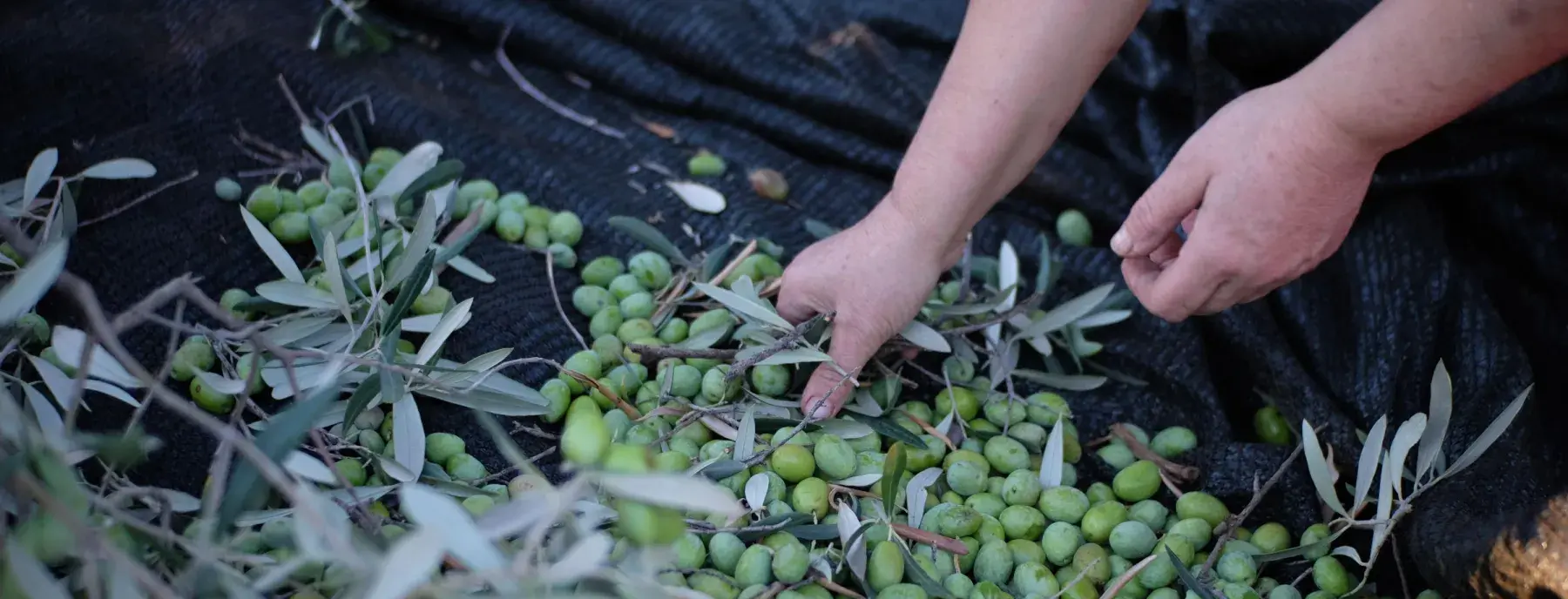
The olive harvest in Tuscany usually runs from mid-October to late November, sometimes into December. The exact timing depends on the year, the altitude and the producer’s style.
Many Tuscan producers pick early, while the olives are still mostly green and only just turning purple. Early-harvested olives give less oil, but it’s greener, more intense and richer in natural antioxidants. That’s a big part of Tuscan oil’s reputation: bold, grassy and peppery.
Harvesting is still largely done by hand or with small tools. Nets are spread under the trees, and the olives are combed from the branches with hand rakes or light mechanical shakers. On small farms, it’s a family affair, with friends and neighbours joining in.
How is olive oil made? From the tree to the mill


Olive oil is made by crushing whole olives into a paste, gently mixing that paste so the oil droplets come together, and then separating the oil from the water and solids. For extra virgin olive oil, the whole process must be mechanical, with no chemicals and no excessive heat.
Speed is everything
Once picked, olives start to deteriorate. Good producers take them to the mill within a day. The longer they wait, the more the quality drops.
Crushing
At the mill, leaves are removed and the olives are washed. Then they’re crushed, stones and all, into a thick paste. Traditional mills used huge granite wheels. Most modern mills use steel crushers, which are faster and easier to keep clean.
Malaxation
The paste is then slowly mixed for a while. This step, called gramolatura in Italian, helps tiny oil droplets join into larger ones. Temperature matters here: to be labelled “cold extracted,” the paste must stay below 27°C. Too much heat increases yield but damages aroma.
Separation
Finally, a centrifuge separates the oil from the water and solids. What comes out is cloudy, bright green and very intense. Some producers filter it. Others bottle it unfiltered as olio nuovo.
What does extra virgin olive oil mean?
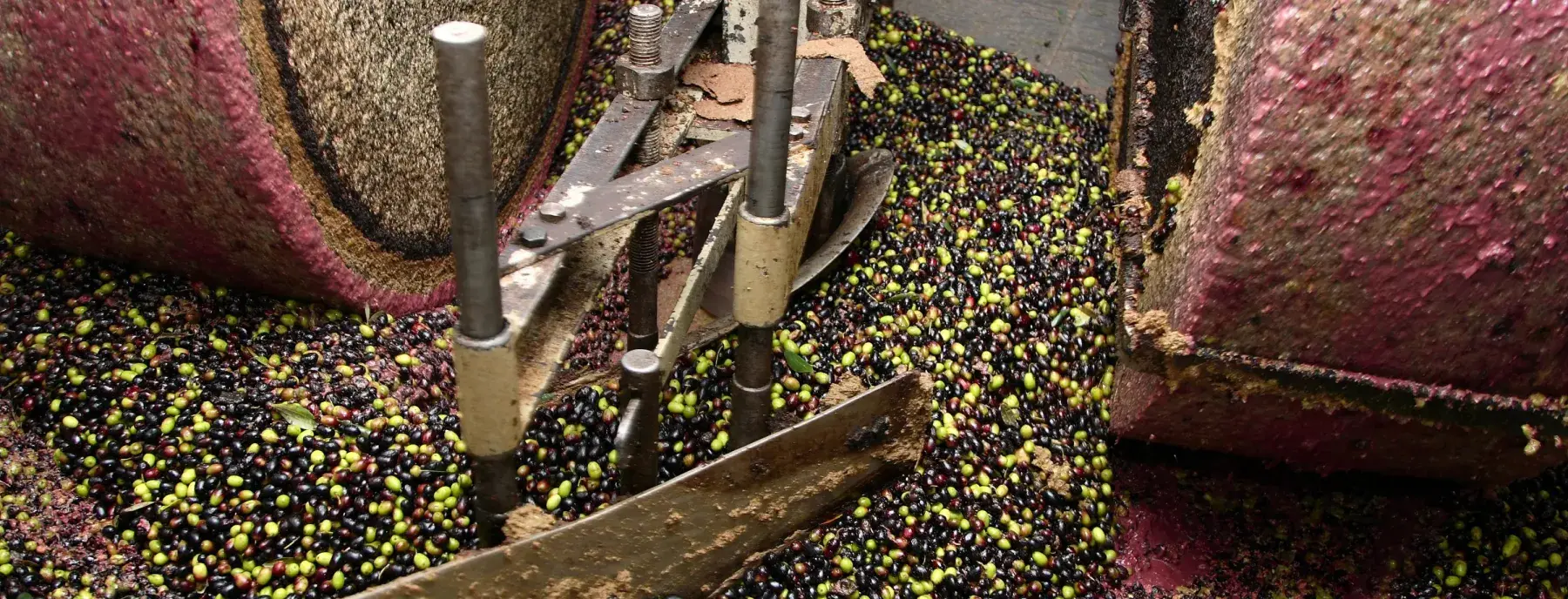
Extra virgin olive oil is the highest grade of olive oil. It must be extracted only by mechanical means, have a free acidity of no more than 0.8%, and pass a sensory test by trained tasters: it must have some fruitiness and no defects.
That last point is often forgotten. Extra virgin is not only a chemical category. A panel has to smell and taste it. An oil that smells rancid, musty or vinegary cannot be called extra virgin, even if its acidity is low.
“Virgin” olive oil is the grade below, with slightly higher acidity and minor defects allowed. Oils simply labelled “olive oil” are usually blends of refined oil with a small amount of virgin oil.
In Tuscany, you’ll also see quality labels such as Toscano IGP and Chianti Classico DOP. They guarantee the oil’s origin and production rules, set by each consortium.
Olio nuovo: why new oil is worth waiting for
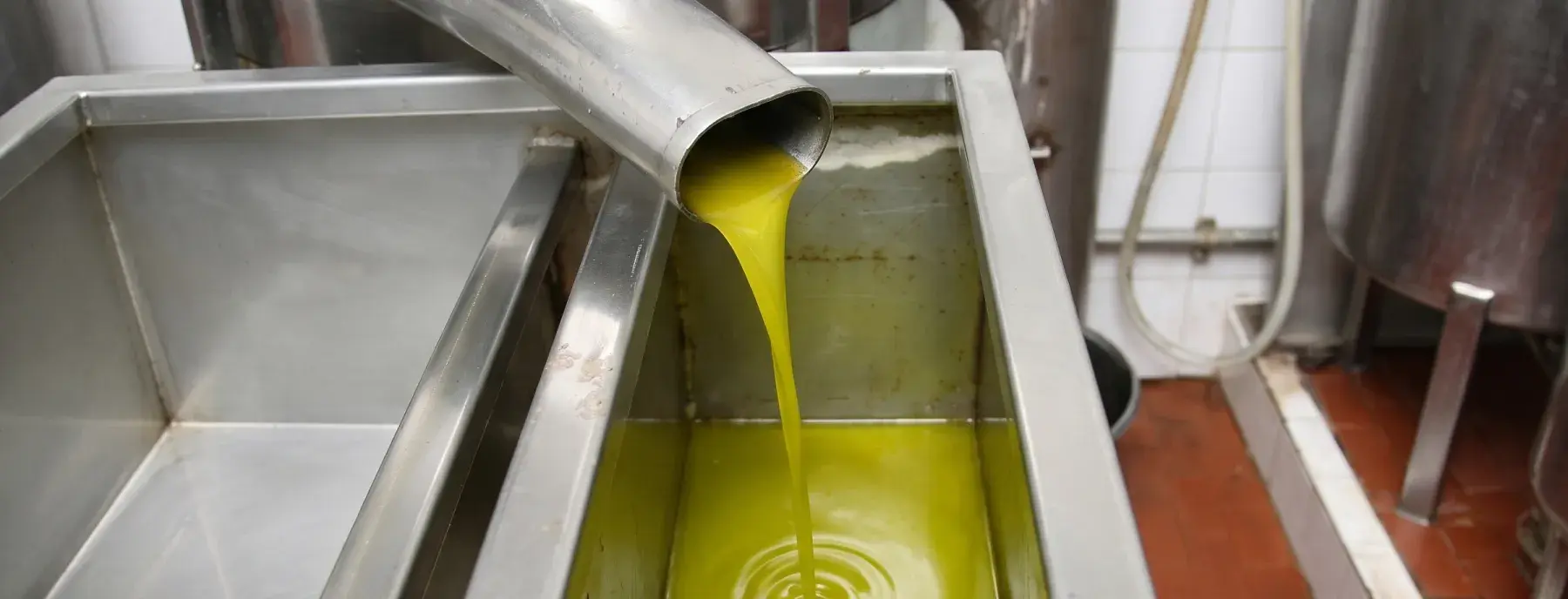
Olio nuovo, new oil, is oil fresh from the mill, usually unfiltered and drunk within the first weeks after pressing. It’s bright green, sometimes slightly cloudy, with an aroma of cut grass, artichoke and green almond.
It’s also at its most intense. The bitterness and the peppery kick are at their peak. Over the following months, the oil settles and softens. Some people prefer it that way. Many Tuscans wait all year for those first, almost aggressive weeks.
The classic way to enjoy it is fettunta: a slice of grilled Tuscan bread rubbed with garlic, a pinch of salt and a generous pour of new oil. Nothing else is needed.
What does olive oil taste like? How to taste it like a producer

Good extra virgin olive oil tastes fruity, bitter and peppery. Those last two sensations surprise many people, but they’re signs of quality, not faults. They come from natural compounds in fresh olives that fade in older or lower-quality oils.
You can try a simple tasting at home, the same way producers do.
1. Pour and warm
Pour a little oil into a small glass. Cover it with one hand and cup it with the other for a minute to warm it slightly. Warmth releases aroma.
2. Smell
Uncover and breathe in. Look for fresh notes: cut grass, green tomato, artichoke, apple, herbs. A good oil smells alive.
3. Sip and slurp
Take a small sip and, with your teeth almost closed, draw in some air with a slurp. It looks strange, but it spreads the oil around your mouth and releases its aroma.
4. Notice bitterness and pepper
Bitterness appears on the tongue. Pungency shows up a moment later, as a tickle at the back of the throat. A strong Tuscan oil might even make you cough. Tasters jokingly call it a “one-cough” or “two-cough” oil.
What a defect smells like
Rancid oil smells like old nuts or crayons. Fusty oil smells of fermentation or mud. If you notice either, the oil is past its best, or was never good to start with.
Colour, by the way, tells you very little. That’s why professional tasters use dark blue glasses: so the colour doesn’t influence their judgement.
How to choose and store a good Tuscan oil
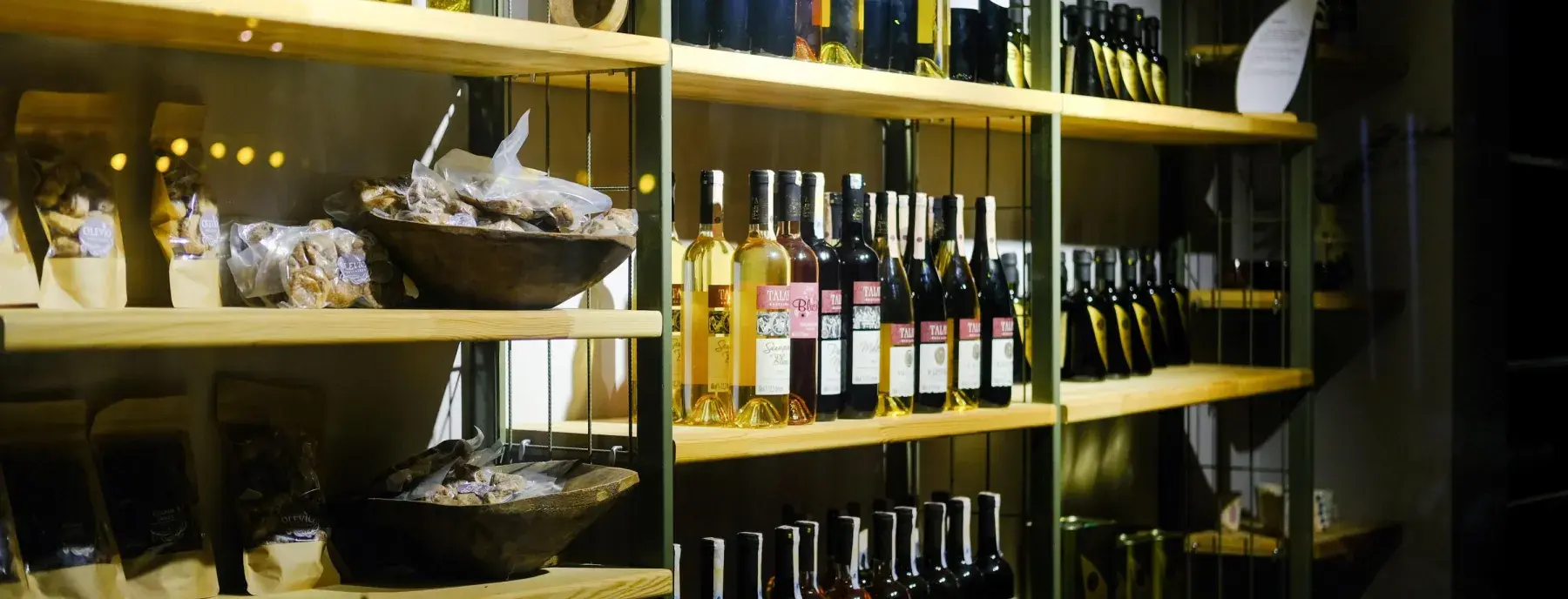
Check the label for a harvest date, not just a “best before” date. Look for dark glass bottles or tins, which protect the oil from light. Choose an oil from a named area and producer when you can.
At home, keep it away from the stove, sunlight and air. Olive oil is not wine: it doesn’t improve with age. Ideally, use it within a year or so of the harvest, while it still tastes fresh.
Back to where it’s made
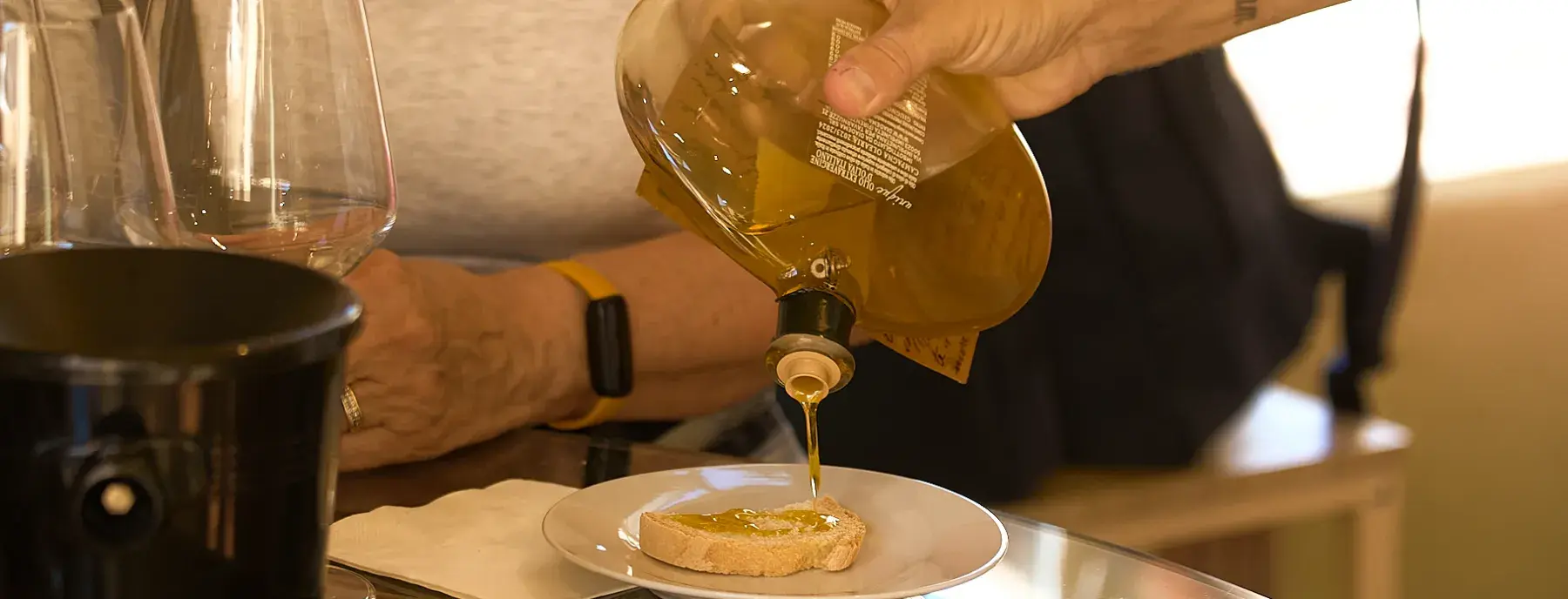
Tasting olive oil in a glass is interesting. Tasting it at the farm, a few steps from the trees it came from, is something else. In the Chianti hills, many estates produce both wine and oil, and a visit lets you understand both through the same landscape.
If you’re planning a day in the area, our guide to a Chianti day trip from Florence is a good place to start. And if you happen to be in Tuscany in autumn, look out for new oil on every table. It’s one of the best reasons to visit at this time of year.
Good olive oil isn’t just a condiment. It’s the taste of a place, a season and a very particular kind of patience.
Make it real. Taste it where it’s made.
In this article
Make it real
Explore our tours in Italy
